
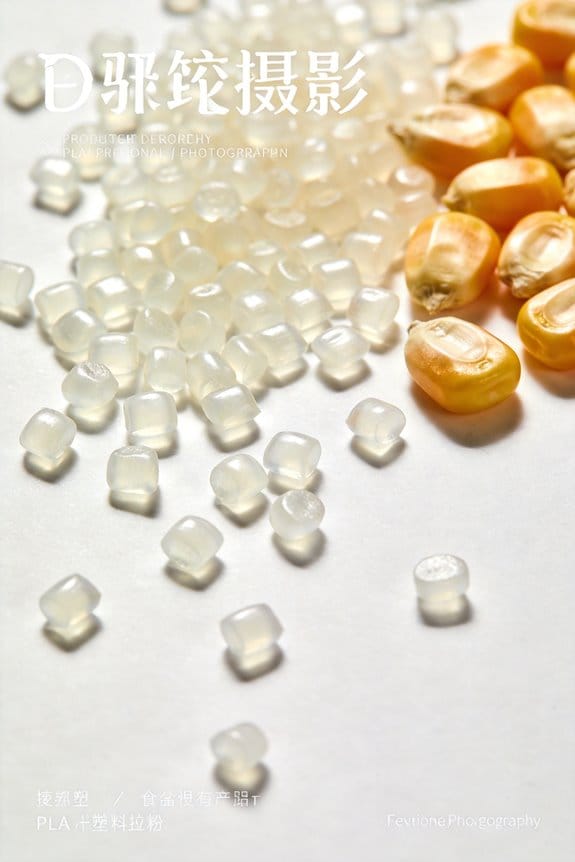

PLA, or polylactic acid, is a biodegradable plastic made from renewable resources, like corn starch and sugarcane. It’s created by turning corn into dextrose, which bacteria ferment into lactic acid. This lactic acid then forms a ring, called lactide, which we polymerize to get PLA. We like PLA because it uses 65% less energy and emits 68% fewer greenhouse gases than regular plastic. It’s an exciting option for eco-friendly products, and there’s more to explore about its uses and benefits!
Key Takeaways
- PLA is created from renewable resources like corn starch, which is converted into dextrose through wet milling.
- Dextrose undergoes fermentation by Lactobacillus bacteria, producing lactic acid.
- The lactic acid is then chemically transformed into lactide, a ring-shaped dimer.
- Ring-opening polymerization of lactide produces the final product, polylactic acid (PLA).
- The complete process yields compostable material suitable for various applications and significantly reduces environmental impact.
What Is PLA and How Is It Made?
Have you ever thought about what your packaging is really made from? PLA, or polylactic acid, is one option that’s been getting a lot of attention lately. This biodegradable plastic comes from renewable sources, like corn starch and sugarcane, making it a more sustainable choice compared to traditional plastics.
Creating PLA is a pretty neat process. First off, corn starch gets fermented into dextrose, and then Lactobacillus bacteria step in to turn that into lactic acid. The magic happens during polymerization, where we end up with long chains of this eco-friendly plastic. You might be surprised to learn that it takes 65% less energy to produce PLA than regular plastics, which also means it generates 68% fewer greenhouse gases.
So, why does this matter? Well, PLA isn’t just limited to packaging. It’s also great for 3D printing and even medical devices. With its versatility, it’s definitely making a mark in the world of sustainable materials. Honestly, how cool is it that we can reduce our impact on the environment with something so useful?
Furthermore, products made from PLA are often certified for home compostability, aligning with standards like ASTM D6400 to ensure they break down safely and effectively.
If you’re looking to make a change, consider how you can incorporate products made from PLA into your life. It’s a step towards more eco-friendly living, and every little bit counts.
In short, PLA represents a step in the right direction for materials that are kinder to our planet. What will you choose next time you shop?
How PLA Is Produced: A Step-By-Step Process

Ever thought about where those eco-friendly materials come from? Producing PLA (polylylactic acid) may sound complicated, but it’s actually a pretty simple two-step process that begins with something as basic as corn starch.
First up, corn starch is turned into dextrose through a method called wet milling. Then, that’s where the magic happens: Lactobacillus bacteria step in and ferment the dextrose into lactic acid. After that, this lactic acid is transformed into lactide, which is a ring-shaped dimer. The final step is the real kicker – the lactide goes through ring-opening polymerization to become PLA.
So, why does this matter? This production method is pretty remarkable. It uses 65% less energy and emits 68% fewer greenhouse gases compared to traditional plastics made from petroleum. The finished product is compostable and can be crafted into all sorts of things, like films, containers, and even 3D printing filament. I mean, who doesn’t love materials that come from renewable sources and decompose beautifully?
Truth is, you don’t have to be a scientist to appreciate how PLA contributes to a more sustainable world. Next time you use a PLA item, think about the journey it took to get there. Sounds like a better choice, right? Plus, when PLA is used in products like compostable paper plates, it helps reduce environmental pollution by breaking down naturally in compost settings.
Recommended Products

Investment Casting with PolyCast: PolyCast moldlay filament is a new 3D printing material designed for creating investment patterns in casting applications. It significantly reduces costs and lead times by eliminating the tooling process.
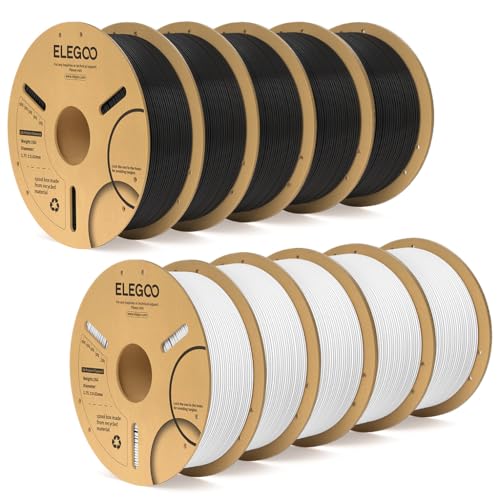
HIGH QUALITY PLA FILAMENT: Made of high-quality PLA, a commonly used thermoplastic material features lower melting temperature and ease of use, low warp and shrinkage, odorless during printing, and provides a glossy surface finish

Print without Warping - Creality Ender PLA 3d printer filament made of environmentally friendly PLA material, the printed model is low shrinkage and easy to print without warping
What Are the Key Properties and Benefits of PLA?

What makes PLA such a popular choice for eco-friendly products? It all starts with its origins. PLA, or polylactic acid, is made from sugar sourced from renewable resources, which presents a sustainable alternative to regular plastics. Not only is this bioplastic biodegradable, but it’s also compostable in industrial conditions, breaking down into natural materials in just about twelve weeks.
Now, let’s talk numbers. PLA production uses 65% less energy than your typical petroleum-based plastics and emits 68% fewer greenhouse gases. Those figures really add up, don’t they? When you think about the long-term benefits for our planet, it’s hard to overlook!
PLA products come with some impressive mechanical properties, too. They have a tensile strength of 50 MPa, making them quite durable for everyday use. Plus, they’re non-toxic and safe for food contact, which is why you’ll find them in things like packaging and disposable cutlery. If you’re looking to make more sustainable choices in your life, PLA is definitely worth considering.
An important factor is that many PLA-based products are BPI certified, ensuring their compostability meets strict environmental standards.
The best part is, PLA is super versatile. You won’t find this material limited to just one or two products; it’s popping up all over the place. So next time you’re out shopping, why not opt for a PLA product?
In short, choosing PLA supports both sustainability and quality. What small changes in your buying habits can you make to promote a greener future?
Recommended Products

Custom Printing Service: We offer custom printing service, allowing you to personalize your packaging with brand name, logo, and design, making it an ideal choice for businesses looking to create a unique identity and make your products stand out.Click "Customize Now" to create your package.
![[1000 Count]Sugarfiber by Harvest 22oz Round Compostable Bowls PFAS Free with PLA coating, Heavy-Duty Eco-Friendly Disposable Bagasse Bowl, Sugarcane made plant fibers for Meal Prep](https://m.media-amazon.com/images/I/51ASpHW6RLL._SL500_.jpg)
🌱 ALL NATURAL - Made with 100% non-toxic plant byproduct material that has a natural look with a sturdy paper-like texture
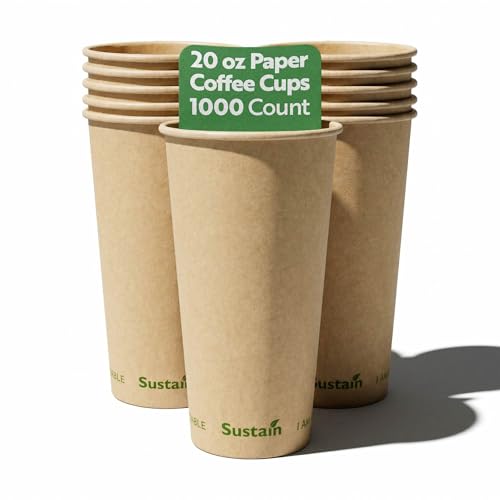
COMPOSTABLE WITH BPI CERTIFICATION: Made from kraft paper with PLA lining, these moistureproof coffee cups are sturdy and commercially compostable. Perfect cup of coffee always!
What Industries Use PLA?
Have you ever wondered how something as simple as packaging can have a big impact on the planet? Let’s dive into the world of PLA, a bioplastic that’s making waves across various industries.
First off, the food industry is embracing PLA for its biodegradable packaging. You’ll find it in cups, cutlery, and containers that not only serve your meals but also help reduce waste. It’s a small change that can lead to a more sustainable dining experience.
Another area where PLA shines is in 3D printing. If you’re into printing at home or professionally, PLA is often the filament of choice. Why? It’s easy to work with and has a low melting point, making it perfect for projects big and small.
The medical sector also utilizes PLA in some pretty cool ways. Think about biodegradable medical devices and implants, like screws and pins, that are biocompatible. It’s fascinating how this material can help in healing while being kind to the environment.
Don’t overlook textiles, either! PLA is woven into a variety of fabrics found in clothing and carpets. Imagine wearing a shirt or walking on a rug that not only looks good but also has a lower environmental impact.
When it comes to packaging, the sustainable benefits of PLA are hard to ignore. It contributes to a reduced carbon footprint and supports circular economy initiatives by being compostable.
In addition, many biodegradable dinnerware products incorporate PLA alongside sugarcane fiber and cornstarch to enhance compostability and durability.
So, why does this matter? By choosing products made with PLA, you’re not just making a purchase; you’re supporting a move toward more sustainable practices across several industries. Isn’t it nice to know your choices can help the planet?
In short, PLA is transforming many sectors, from food to medicine. Next time you’re out shopping or working on a project, consider how your choices can make a difference. What small changes are you willing to make for a more sustainable future?
Recommended Products

FIRM FOR HOURS, ZERO PLASTIC – Unlike paper or PLA straws that wilt or leach chemicals, our agave fiber straws stay rigid in hot coffee (up to 106°F), frozen margaritas, and smoothies—no bending, no taste, no microplastics.


COMPARTMENT DESIGN: Features three built-in compartments, facilitating organized meal presentations by separating an entree and two sides within the same container.
How Does PLA Impact the Environment?
Have you ever wondered how your everyday choices impact the environment? It’s crucial to get a handle on how PLA, or polylactic acid, plays a role in this picture. While PLA is biodegradable and compostable, keep in mind that it only breaks down effectively in industrial composting facilities, where it can decompose within about 12 weeks. The catch? It doesn’t decompose well in regular settings like ambient temperatures or seawater. This leads to some challenges when it comes to waste management.
On the bright side, producing PLA requires 65% less energy compared to traditional plastics and emits 68% fewer greenhouse gases. That’s a pretty significant reduction in its carbon footprint! But there’s a flip side: the crops needed to make PLA, like corn, can impact land use and water quality. So, what’s the best approach here?
Try to keep it simple: opting for PLA products when possible, especially when you have access to proper disposal facilities, can help mitigate some of the environmental downsides. The best part is that ongoing improvements in recycling methods are making PLA increasingly sustainable. Many compostable bags, made from plant-based materials like PLA and certified under standards such as ASTM D6400, demonstrate effective industrial compostability.
With each small choice you make regarding materials, you’re contributing to a cleaner environment. So, what’s your next step in making eco-friendly decisions? Remember, every effort counts!
Frequently Asked Questions
Can PLA Be Recycled or Composted After Use?
Yes, PLA can be composted, especially through industrial composting methods. However, recycling challenges and contamination issues complicate PLA recycling. We should focus on consumer education and eco-friendly alternatives for better disposal strategies in our communities.
What Are the Temperature Limits for PLA Products?
Isn’t it fascinating how materials perform under heat? PLA typically has a melting temperature around 150°C and can struggle above 60°C, leading to thermal degradation in high temperature applications while lacking environmental resistance at low temperatures.
Is PLA Biodegradable in All Environments?
PLA isn’t biodegradable in all environments. Its decomposition rates vary, performing best in industrial composting facilities. In landfills or marine environments, soil contamination occurs, raising concerns about its environmental impact and overall carbon footprint.
How Does PLA Compare to Traditional PLAstics in Strength?
PLA’s strength comparison to traditional plastics shows it can lag behind in tensile strength and impact resistance. Yet, its thermal stability and flexural strength make it a viable biodegradable option, reducing environmental impact during manufacturing processes.
What Are the Potential Health Effects of PLA Exposure?
We’ve seen scientific studies indicate PLA exposure poses minimal health risks under current safety regulations. However, toxicity concerns exist regarding manufacturing processes. Consumer awareness and labeling standards are vital to understanding potential long-term effects and exposure limits.


