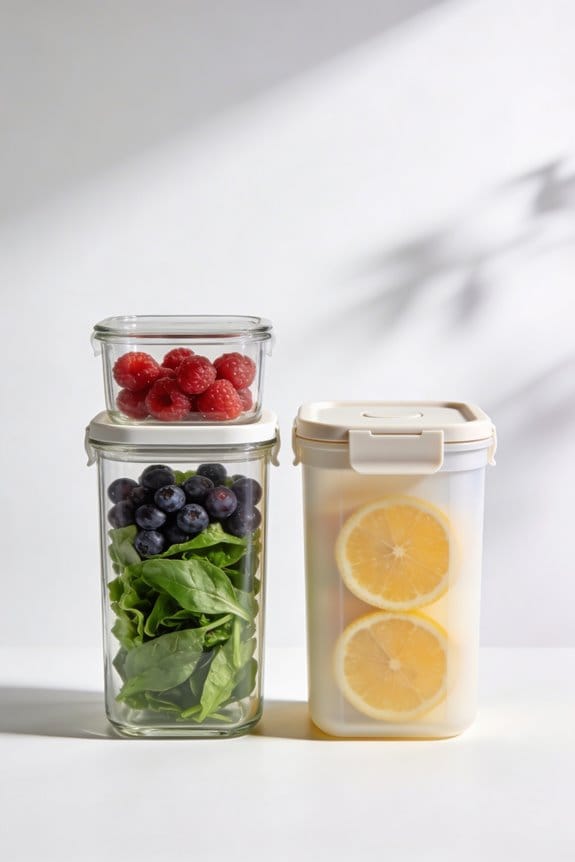


We can freeze food without using plastic Ziploc bags by opting for glass jars or stainless steel containers. Glass jars, particularly wide-mouth ones, work great and should leave about ¾ inch of headspace for liquids. Wrapping food in heavy-duty aluminum foil helps prevent freezer burn. Labeling your jars is essential for easy access later. For meal prep, consider using reusable silicone bags for convenience. Stick around for more handy tips on keeping your food fresh and waste-free!
Key Takeaways
- Use freezer-safe glass jars, preferably wide-mouth, for liquids and to reduce breakage during freezing.
- Wrap food in heavy-duty aluminum foil or freezer paper to minimize freezer burn effectively.
- Consider reusable silicone bags for versatile and eco-friendly storage without plastic.
- Label all containers with their contents and freezing dates for easy identification and organization.
- Leave adequate headspace in jars for liquid expansion and cool food completely before freezing it.
The Benefits of Freezing Food Without Plastic
Have you ever thought about how much plastic we use just to store food? Freezing food without plastic can not only be a healthier choice for you, but it’s great for the environment, too. Instead of opt for plastic containers, think about using glass jars or sturdy airtight containers. They don’t leach harmful chemicals into your food, and they can handle the cold without a problem, which means there’s less chance of freezer burn ruining your meals.
The reality is, each year, more than 300 million tons of plastic are produced. By opting for glass, you’re playing a part in reducing that staggering number. Just imagine how much waste we could cut if more people made this simple switch!
Here’s the trick: good storage can significantly minimize food spoilage. When you freeze your meals in glass, you’ll find they maintain their flavor and freshness much longer. Plus, you’re saving money in the long run by not throwing out spoiled groceries. It’s a win-win situation, really.
Frankly, there’s something satisfying about knowing you’re not contributing to plastic waste. Choosing reusable materials not only supports sustainability but also makes you feel a little better about your grocery choices. So why not give it a try?
Glass containers made from borosilicate glass are especially durable and safe for freezing due to their resistance to extreme temperatures.
Choosing the Right Containers for Freezing

Choosing the right containers for freezing can make a big difference in how well your food lasts. Have you ever had a container crack on you after being in the freezer? Glass containers, especially wide-mouth jars, are a solid choice because they resist shattering as long as you fill them three-quarters full. Plus, they let you see what’s inside easily, which is a bonus for keeping everything organized.
Stainless steel containers are another durable option. Just keep in mind that you won’t be able to see what’s inside, so labeling is essential. And always remember to leave a little headspace when you’re storing liquids, as that way they have room to expand without causing any mess.
For added protection against freezer burn, consider wrapping your items in heavy-duty aluminum foil or wax paper. Honestly, this little step can help maintain your food quality over time.
Now, to keep things organized, make it a habit to label your containers and keep a handy inventory of what you have stored. This not only cuts down on waste but also makes it so much easier to find what you need when you’re in a hurry.
When choosing glass containers, look for those made from borosilicate glass, as they offer superior temperature resistance from freezer to oven.
Recommended Products

Versatile freshness: the ZWILLING Fresh & Save Bowls starter set with 3 versatile glass bowls (12, 18 and 24 cm diameter) for preparing, baking, serving and storage, plus matching vacuum lids with double sealing technology. Includes 4 STAUB ceramic bowls (12 cm) in cherry red and a vacuum pump.

KEEP YOUR FOOD FRESH: Look forward to leftovers with Caraway’s easy-to-store, non-toxic food storage containers. This set of six 10 cup glass containers was designed to be displayed and keeps your food fresh & organized.

KEEP YOUR FOOD FRESH: Look forward to leftovers with Caraway’s easy-to-store, non-toxic food storage containers. This set looks great and most importantly keeps your food extra fresh and organized.
How to Freeze Food Step-by-Step

Freezing food can feel overwhelming, but it doesn’t have to be. You might ask yourself, how can I do this right without wasting my food? Here’s the scoop: it’s all about following a few easy steps that can really make a difference in saving time and cutting down on waste.
First off, think about your containers. Choosing freezer-safe glass jars is a smart move. Make sure you grab those wide-mouth ones – they’re great for liquids and won’t break when things expand. Next, when you wrap up your food, go for heavy-duty aluminum foil or freezer paper. This is an easy way to minimize freezer burn, and the best part? They’re recyclable!
Now, if you’re freezing firm fruits or veggies, there’s a little trick to keep them from sticking together. Start by storing them unpackaged in the freezer for a bit. After they’re frozen, transfer them to containers. This way, it keeps everything nice and separate.
And let’s not forget about labeling. Keeping track of what’s in each container is a must! Grab some durable markers and tape to label everything. You’ll thank yourself later when you’re looking for that one item.
If you’re after convenience and want to be friendly to the environment, reusable silicone bags are an excellent choice. They’re versatile and can be used for so many different foods. Many silicone freezer bags are made from food-grade silicone, which is safe, durable, and can withstand both freezing and reheating temperatures.
Recommended Products

From our Dean Collection - Understated and quite handsome, this decanter in mouth blown glass grounded with subtle rope base makes a lovely gentleman's gift.

CRYSTAL CLEAR PLASTIC Lightweight, Impact Resistant, BPA free (Not Dishwasher Safe) Freezer Safe Food Grade PET Plastic Containers

Fits Wide Mouth Ball Mason jars (not included)
Why Choose Reusable Silicone Bags for Food Storage?
Are you tired of tossing out food because it spoiled too quickly? Reusable silicone bags could be just what you need for eco-friendly food storage. Made from sturdy, food-grade silicone, these bags can handle everything from freezing to microwaving, and even sous-vide cooking. They’re built to last, which means less plastic waste in our lives and more savings for your wallet over time.
Many silicone bags are designed to be airtight and leak-proof, which helps keep your food fresh and free from freezer burn. That’s a win-win, right? Cleaning these bags is also a breeze. Just pop them in the dishwasher’s top rack and you’re good to go.
Here’s the trick: their flexible design makes packing and pouring so much simpler compared to rigid containers. Feel like whisking up some smoothies? It’s easier to pour them from silicone bags than from traditional containers or pitchers.
So, why does this matter? Switching to silicone bags is not just a smart choice—it’s a choice for the planet. They’re extremely versatile, making them perfect for snacks, marinating meats, or even storing leftovers. Plus, you won’t have to worry about the bags breaking or fading over time.
In short, reusable silicone bags are a practical and eco-friendly option for food storage. Additionally, many silicone bags hold up to high temperature ranges, allowing you to safely freeze or heat foods without damage. Why not give them a try and see how they fit into your kitchen routine? If you’re looking to cut down on plastic and make a more sustainable choice, these bags are definitely worth considering. What innovative food storage solutions have you found that help you live a more eco-conscious life?
Recommended Products

Set Includes: Vacuum pump body x 1, USB cable x 1, Vacuum glass container S / M x 1, Vacuum storage bag S / M x 2, Clip x 1, Liquid protector x 1

MAXIMIZE VALUE - 50 x (Non-Silicone) Strong Poly-Nylon Bags Made in USA, Subject to California's Relevant Regulations & Quality Control Standards, Ensuring Consumers Smelly Proof Bags Adhere to Highest Benchmarks,

Unmatched Quality & Durability - 50 x Washable Smelly Proof Bags Extra Large Reusable Flat Bags, 5mil Heavy Duty Thickness, Puncture-Resistant, Tear Proof. Designed for Repeated Use Over & Over Again,
Glass Jars: Best Practices for Freezing
Have you ever found yourself tossing out frozen food because it got freezer-burnt or even worse, broke a glass jar? Freezing food in glass jars can definitely be a smarter choice if you know a few simple tricks.
First off, always make sure to leave at least ¾ inch of headspace in the jars when you fill them. This little trick allows the liquids to expand as they freeze without breaking the jar. If you can, go for wide-mouth or shoulder-less jars. They’re so much easier to fill and clean, plus it cuts down the risk of breakage. No one wants to deal with a mess in the freezer!
Cooling your food completely before packing it into jars is another thing to keep in mind. If you need to, refrigerate everything overnight. Trust me, it’ll make a difference in preventing any unwanted cracks in your jars. And here’s an important point: once you’ve filled them up, hold off on tightening the lids until they’re fully frozen. This helps keep the air safe inside the jar.
The best part is that by avoiding overcrowding the freezer, you’ll ensure even freezing and cut down on accidents. You want the food to freeze evenly without stuff smashing into each other, right?
So, how do you keep your frozen food looking good and tasting fresh? A few simple steps can make all the difference. Choosing durable materials for your storage containers can also help maintain food quality over time.
To sum it up, freezing food in glass jars can be a breeze if you keep these tips in mind. What’s your biggest challenge when it comes to freezing food?
Recommended Products

Complete Strain & Store Bundle – Filter Press, Butter Tray, and 3 Mason Jars provide everything needed to strain, mold, and store infused butters and oils.

9-piece canning kit includes 21-quart canner, canner lid, 7-jar rack, 9-inch colander, lid wrench, funnel, tongs, jar lifter, and magnetic lid lifter

Provides 450 mg of Omega-3 per serving
Freezing Without Packaging: Techniques and Tips
Ever found yourself staring at your freezer, wondering how to save some food without using plastic bags? It’s a common dilemma, but the good news is, there are plenty of ways to freeze food without them.
For fruits, try freezing firm ones like bananas and berries without any packaging. Their skins provide a natural barrier, keeping them fresh while they chill in the freezer. Vegetables like rhubarb or various herbs can also be frozen without bags. Just make sure to wash them really well beforehand. They might not last as long as their packaged counterparts, but they can still hold up pretty well.
When it comes to freezing liquids like broth or purees, ice cube trays are your new best friend. Just pour the liquid into the trays and freeze. Once they’re solid, pop the cubes into stainless steel containers or glass jars for easy storage. This approach really cuts down on plastic waste and keeps your food fresh for future use.
Additionally, using reusable bags made from durable materials can be a smart alternative for storing frozen food without relying on disposable plastic.
So, why does this matter? Using these techniques not only helps the environment but also can save you some cash in the long run. Honestly, it feels great to take small steps toward being more eco-friendly in the kitchen.
Ready to give it a try? Freezing without packaging might just become your new favorite kitchen hack!
Preventing Freezer Burn
Ever pulled something out of the freezer only to find it covered in icy crystals? Yeah, that’s freezer burn, and it can ruin your food. If you want to keep your frozen meals tasting fresh, you’ll need a solid game plan.
First off, think about how you’re storing your food. Use airtight containers or heavy-duty aluminum foil to create a good barrier against moisture. For dry items, packing them tightly into glass jars is great—just remember to leave a little space at the top for liquids.
Here’s the trick: if you’re feeling creative, try wrapping food in wax paper or using reusable silicone bags. Both of these options can help keep out the air. And when you freeze, don’t forget to divide larger portions into smaller ones; this not only speeds up the freezing process but also helps cut down on ice crystal formation.
Also, label each package with the date when you freeze it. It’s a simple way to track how long your food’s been in there. So, why does this matter? Foods kept in the freezer too long can lose flavor and texture, making mealtime less enjoyable.
To wrap it all up, by following these simple tips, you can prevent freezer burn and keep your meals delicious. Additionally, maintaining proper ventilation and material quality around your stored items can further reduce moisture buildup that leads to freezer burn. What’s one dish you’re excited to freeze for later?
Recommended Products

Set includes: 1 small, 1 medium and 1 large glass container, 1 glass fridge box, 10 assorted vacuum bags, 1 vacuum wine sealer, 1 vacuum pump Containers are temperature resistant: 0°F to 356°F Freezer-safe, microwave safe (without vacuum seal), ovenproof (without lid) All container sizes are stackable for easy storage Container lids will create a perfect seal Vacuum bags: BPA-free plastic. Glass containers: borosilicate glass (base), plastic (lid), silicone (valve, seal) Marinate and prep/cook sous vide under vacuum with Fresh & Save Store, bake, and serve all with the same container. Vacuum pump can be charged with the included USB cord All containers are dishwasher safe

STASHER COMPLETE STARTER KIT COLLECTION: This variety pack is excellent for gifting or for starting your own plastic-free journey. The Stasher Reusable 10-Pack Starter Kit includes: 1 Sandwich Bag, 1 Snack Bag, 1 Stand-Up Mid Bag, 1 Pocket Bag, a 1 Cup Bowl, a 2 Cup Bowl, and 4 Stretch Lids (9”, 6.5”, 4.5” and 2.5” lids).

50 x REUSABLE 2-GALLON STORAGE BAGS – XXL Washable Reusable Food Storage Bags, Reusable Storage Bags, 3 mil Thick / 256 fl oz (7.6 L), Clear FLAT 12” x 16” 2-Gallon Freezer Bags, TRIPLE ZIP Closure, Airtight Seal, Leakproof Closure, Food Grade, BPA FREE, NO PEVA, PHTHALATE FREE, Non-Toxic, No Latex,
Thawing Frozen Foods: Best Methods
Thawing frozen foods doesn’t have to be a hassle. You’ve probably found yourself standing in front of the freezer, frozen chicken breasts or a lasagna staring back at you, wondering how to get it ready for dinner without a headache.
One of the safest methods is to toss your food in the refrigerator the night before. It’s a no-fuss approach that keeps your food out of the danger zone for bacteria. Just think about how easy it is—set it and forget it!
If you’re in a pinch and need to thaw something quickly, try this: submerge sealed bags of food in cold water. Make sure to change the water every 30 minutes for even thawing, and your meal will be ready to cook in no time. Who knew that a little cold water could make a big difference?
Now, microwaving can also save you when you’re racing against the clock. The catch is you need to cook that food right after it’s defrosted. Otherwise, you might invite unwanted bacteria to the party, and nobody wants that!
Here’s a little secret: some veggies can be cooked directly from the freezer. It’s a huge time-saver and keeps the meal prep even simpler. No thawing required—just toss them in the pot or pan!
On that note, let’s chat about slow cookers. Honestly, it might seem tempting to thaw meat in there, but doing so can keep it in that risky temperature zone for way too long, which isn’t safe for your health. Better to stick with the methods mentioned above.
For those who prefer natural tools, incorporating natural bristle brushes can enhance your food preparation and cooking experience by providing ergonomic, durable options for various culinary tasks.
Meal Prep Ideas for a Plastic-Free Kitchen
Getting into meal prep without plastic sounds tough, but it can actually be pretty straightforward. For freezing small portions, mason jars are a solid choice—just remember to leave them about a quarter empty to let everything expand as it freezes. And if you’re looking for smart storage solutions for prepared meals, reusable silicone bags are definitely worth checking out. They’re tough, easy to clean, and last a long time.
Want to keep casseroles? Metal baking dishes with lids are a fantastic option, and they’re reusable for years! When it comes to wrapping individual items like burritos or muffins, consider using wax paper or beeswax wraps. They do a great job of preventing freezer burn without bringing any plastic into the mix.
So, here’s the trick: make sure to label all your containers! This helps you keep track of what’s in your freezer, making it easier to manage your meals and reduce waste. It’s a smart way to enjoy your tasty dishes while feeling good about making sustainable choices.
To complement your plastic-free kitchen, consider using bamboo forks as an eco-friendly and compostable alternative to plastic cutlery for your meals.
Frequently Asked Questions
What Can I Use Instead of Ziploc Bags for Freezing?
Instead of Ziploc bags for freezing, we can use beeswax wraps, silicone bags, and glass containers. These options keep our food fresh, reduce waste, and help us contribute to a healthier planet.
How to Freeze Food Without Ziplock Bags?
Did you know that switching to reusable containers can reduce plastic waste by up to 80%? We can freeze food using silicone storage bags, freezer-friendly wraps, or glass jars, ensuring freshness without plastic waste.
What Is the Least Toxic Way to Freeze Food?
The least toxic way to freeze food is using glass containers, silicone wraps, or beeswax wraps. These options keep our food safe from harmful chemicals while being eco-friendly and reusable, reducing our plastic waste effectively.
Do Ziploc Bags Release Microplastics When Frozen?
Yes, Ziploc bags can release microplastics when frozen, impacting our food’s safety. We should consider freezing alternatives like glass or stainless steel containers for healthier food storage solutions that avoid these potential hazards altogether.