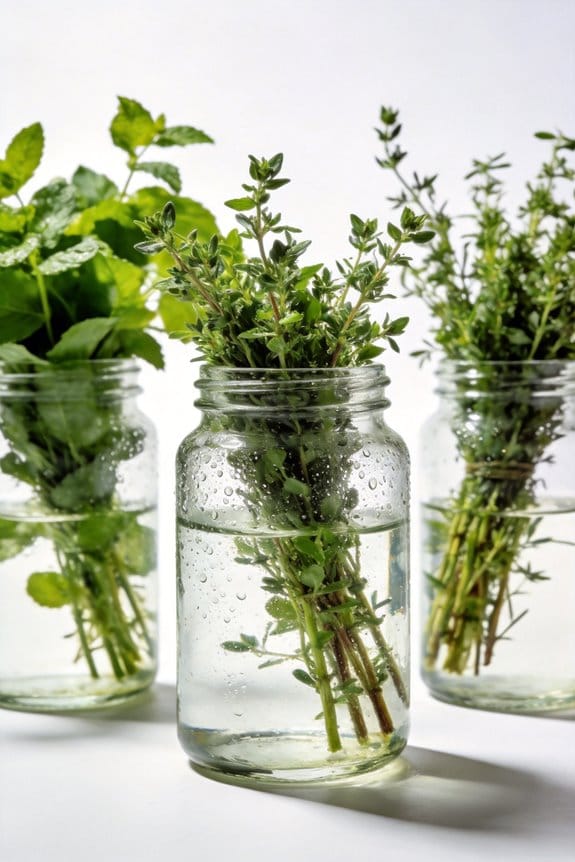

To keep our herbs fresh for weeks, let’s store them in water-filled jars. We should trim the stems at an angle and add about an inch of water. Cover the tops loosely with a plastic bag to keep humidity in. Most herbs love the fridge, but basil prefers room temperature. Remember to change the water every couple of days to avoid bacteria. Want to know more tips for preserving freshness? There’s plenty more we can explore!
Key Takeaways
- Trim herb stems at an angle and place them upright in a jar with an inch of fresh water for optimal hydration.
- Loosely cover the tops of the herbs with a plastic bag to create humidity and prevent moisture loss.
- Change the water every couple of days to keep the herbs fresh and prevent bacterial growth.
- Store soft-stemmed herbs like basil and parsley in the fridge, but maintain basil at room temperature.
- Regularly check for freshness by looking for bright green leaves and remove any discolored or wilting leaves promptly.
Step-by-Step Guide: How to Store Herbs in Water
Storing herbs in water can really keep them fresh, but did you know it’s also incredibly simple? Start by trimming the stems of your herbs, like parsley, at an angle. This little step helps them soak up more water. After that, place the herbs in a jar with about an inch of fresh water.
Want to keep humidity in check? Try loosely covering the tops of the herbs with a plastic bag. It helps create a little greenhouse effect. For most herbs, the fridge is the best storage spot, while basil actually does better at room temperature and out of direct sunlight.
Don’t forget to change the water every couple of days—trust me, it makes a difference in keeping bacteria away. The best part is that with this easy method, you can keep your soft-stemmed herbs, like parsley, fresh for up to 10 days. Isn’t that a win? Using bamboo bowls to serve your herbs can further enhance your eco-friendly dining experience.
Recommended Products

𝗦𝗰𝗲𝗻𝘁 - 𝗣𝗿𝗼𝗼𝗳, 𝗔𝗶𝗿𝘁𝗶𝗴𝗵𝘁 𝗮𝗻𝗱 𝗟𝗲𝗮𝗸 𝗣𝗿𝗼𝗼𝗳 : Heavy durable ultraviolet glass locks in aroma with airtight BPA free plastic lid. Insurance against the potency of your goods from leaking. Apothecary jars are good for long term storage.Our Sleek design jars come with an airtight seal with a tightly fitting black glass lid.These miron jars have substantive size, and they can easily fit a variety of organic and all-natural products.

𝗔𝗶𝗿𝘁𝗶𝗴𝗵𝘁 & 𝗦𝗰𝗲𝗻𝘁-𝗣𝗿𝗼𝗼𝗳 : Keep your content fresh and free from odors and leaks with the secure, leak-proof lid. The heavy, durable ultraviolet glass preserves the aroma and potency of your goods. Designed with a secure, airtight seal to keep contents fresh, odor-free, and maintain purity. The black glass lid dish is durable ultraviolet glass locks in aroma. Insurance against the potency of your goods from dissipating.

𝗦𝘂𝗽𝗲𝗿𝗶𝗼𝗿 𝗨𝗩 𝗣𝗿𝗼𝘁𝗲𝗰𝘁𝗶𝗼𝗻 & 𝗔𝗿𝗼𝗺𝗮 𝗟𝗼𝗰𝗸: Made with laboratory-tested black ultraviolet glass that blocks harmful light to preserve potency and fragrance of dried goods and herbal blends
Best Herbs to Store in Water

Want to keep your herbs fresh for longer? Keeping them in water might just be the way to go. Basil and parsley are particularly great options. Just pop a bunch of basil upright in a glass of water, kind of like you would with cut flowers. This method not only helps them stay crisp, but it also keeps their aroma in check.
And it’s not just basil; mint, dill, and scallions all thrive in water too. The secret to maximizing freshness? Change the water every day. For basil, keep it at room temperature and out of direct sunlight. Refrigeration can actually wreck it, so it’s best to let it hang out on your countertop.
With parsley and scallions, a little trick is to re-cut the stems every few days. This helps maintain their crunchiness and freshness. So, why does this matter? Fresh herbs can make a huge difference in your meals, adding vibrant flavors and nutrition.
Honestly, keeping herbs in water is a simple habit that can brighten up your cooking. Using eco-friendly biodegradable plates can complement your fresh herbs for an environmentally conscious dining experience. So give it a try and see how much longer you can enjoy those flavors! Happy herb storing!
Recommended Products

𝗦𝘂𝗽𝗲𝗿𝗶𝗼𝗿 𝗨𝗩 𝗣𝗿𝗼𝘁𝗲𝗰𝘁𝗶𝗼𝗻 & 𝗔𝗿𝗼𝗺𝗮 𝗟𝗼𝗰𝗸: Made with laboratory-tested black ultraviolet glass that blocks harmful light to preserve potency and fragrance of dried goods and herbal blends

60 Jar Spice Rack Organizer - Simplify and elevate your herbs, spices and seasonings organization with an AllSpice Wooden Spice Rack. Complete with 60 4oz / 1/2 c refillable empty glass jars and three lid variations, including shaker and scraper tops
SureTight Lids seal up to 18 Months
Optimal Environments for Different Herbs

Ever wonder why your fresh herbs seem to wilt so quickly? Finding the right environment for your herbs can really make a difference in how long they stay vibrant and flavorful.
For soft-stemmed herbs like basil, cilantro, and parsley, a water storage method works wonders. Just grab a glass, fill it with fresh water, and keep your herbs standing up right. Don’t forget to loosely cover them! Keep basil at room temperature, though—putting it in the fridge can alter its taste and texture.
On the other hand, hardy herbs such as rosemary, thyme, and sage prefer a different approach. Wrap them in damp paper towels, then place them in an airtight container. This little trick can keep them fresh for up to three weeks! And if you’re using water for your soft herbs, change it every couple of days. Why? It helps prevent bacteria from spoiling them and enhances their flavor and fragrance. Using containers with airtight silicone seals can further preserve freshness by preventing moisture loss and contamination.
Recommended Products

3, 16.0-ounce removable stoneware crocks

The 4-Strain Cannador (with nook) is great for someone who likes to keep up an ounce with four different strains.

𝗗𝘂𝗿𝗮𝗯𝗶𝗹𝗶𝘁𝘆, 𝗮𝗲𝘀𝘁𝗵𝗲𝘁𝗶𝗰 𝗮𝗻𝗱 𝗦𝗺𝗲𝗹𝗹 𝗣𝗿𝗼𝗼𝗳: Our Food Storage Containers are not only designed to protect your precious contents but they’re also designed to withstand breaks and drops. These screw top jars are great for travel, sampling, and storage. The airtight container plastic lid creates a smell-proof barrier, making it perfect for storing seasonings and other odorous goods.
Advantages of Storing Herbs in Water
Have you ever opened your fridge, only to find sad, wilted herbs that you forgot about? It can feel pretty frustrating, especially when you want to whip up something delicious. Actually, keeping herbs fresh is easier than you might think—just store them in water!
This method works wonders for soft-stemmed herbs like basil, parsley, and mint. When you place their stems in a glass of water, they stay fresh, crisp, and colorful for as long as two weeks. Regularly changing the water is key to stopping any yucky bacteria from growing.
Here’s the trick: cover the herbs loosely with a plastic bag to keep the humidity in without trapping harmful gases. This little step helps elevate your herbs and keeps them looking vibrant for longer. It’s not just basil and parsley that benefit, either. Dill and scallions thrive this way, too!
So, why does this matter? Fresh herbs can elevate your cooking, making every dish pop with flavor. It’s like having a mini-garden right in your kitchen. Next time you’re at the grocery store or farmer’s market, grab some fresh herbs and give this method a try. For storing herbs sustainably, consider using reusable grocery bags that help reduce plastic waste and keep your produce fresh longer.
Mistakes to Avoid When Storing Herbs
Storing herbs in water can really keep them fresh, but it’s easy to trip up on some common mistakes that lead to spoilage. Ever washed your herbs before using them? It might seem like a good idea, but excess moisture can actually make them slimy. Instead, try trimming the stems at an angle. This little trick lets them absorb more water and stay perkier for longer.
You might think the fridge is the best place for your herbs, but hold on! Soft-stemmed herbs like basil and cilantro prefer a bit more warmth. Keeping them in cold temperatures can do more harm than good. Plus, when you cover them, don’t do it too tightly with plastic. Trapped moisture can lead to mold, and nobody wants that!
And don’t forget to change the water every couple of days. It’s crucial for keeping your herbs fresh. Think about it: a little bit of water maintenance can go a long way in extending their lifespan. Using reusable wraps can also help maintain freshness by providing a breathable cover that reduces moisture build-up. By applying these straightforward tips, you’ll be on your way to enjoying fresh herbs for longer!
How to Cook With Your Water-Stored Herbs
How can you really make the most of those fresh herbs you’ve got sitting in water? When you’re ready to cook, the best thing to do is use them right out of the glass. They’ll not only stay fresh, but they’ll also amp up the flavor of whatever you’re making.
For those soft-stemmed herbs like basil, parsley, and cilantro, try adding them toward the end of your cooking. This way, they’ll keep their gorgeous color and rich taste. On the other hand, if you’re working with herbs like mint or dill, chop them up finely and toss them into salads or dressings. They add a lovely aromatic touch that can really elevate your meal.
When you’re making soups or sauces, here’s the trick: add those herbs just before you’re ready to serve. Doing this will pack in the best flavor and freshness. And don’t forget to give the stems a little trim every now and then; it’ll help keep your water-stored herbs perky and tasty while you’re cooking!
To extend the freshness of your herbs even further, consider storing them in airtight containers when not in use to protect against moisture and air exposure.
Benefits of Fresh Herbs in Your Kitchen
Ever wondered how fresh herbs can make a difference in your meals? They really do work wonders! Adding fresh herbs to your dishes can elevate flavors, giving that zing you’ve been looking for. Plus, there’s something about the bright scents wafting from the kitchen that just makes cooking feel more enjoyable.
Using fresh herbs can also boost the nutrition in your meals. They pack a punch with essential vitamins and antioxidants that your body craves. So, why does this matter? Well, when you’re enjoying good food that’s good for you, it just feels right, doesn’t it?
Try this: keep your herbs upright in a glass of water, just like you would with cut flowers. This simple trick can help them stay fresh longer, making it easier to toss them into your recipes throughout the week. The best part is you’ll get inspired to try new dishes, stretching your cooking skills and keeping things exciting in the kitchen.
Honestly, the aroma of fresh herbs not only enhances your meals but also creates a cozy atmosphere. Imagine the warmth filling up your kitchen as you chop and stir them into your favorite recipes. It adds a little magic to the everyday routine of cooking.
To recap, fresh herbs can truly transform your cooking experience! They boost flavor, nutrition, and create a warm vibe in your kitchen. So, are you ready to make fresh herbs a regular part of your cooking adventures? Using natural, nourishing ingredients like cocoa butter is key to maintaining freshness and health in everything you work with.
Signs Your Herbs Are Losing Freshness?
Ever wondered if those fresh herbs you’re so excited about are still good to use? It’s important to know when they’re past their prime; trust me, no one wants to cook with sad, wilted greens. Start by checking the leaves—bright green is ideal, but if they’re yellowing or have brown spots, it’s a sign they’re losing freshness.
Another thing to look for is leaf wilting. When the leaves start to droop, that means they’re losing moisture and flavor, which is definitely not what you want. If you spot slimy textures or any mold, don’t hesitate—just toss them out. And let’s not forget about smell; if the herbs have an unpleasant odor, that’s a huge red flag.
Here’s a quick list to help you out:
- Bright green leaves are fresh; yellow or brown spots mean they’re going bad.
- Wilted leaves are a sign of loss of moisture.
- Slimy textures or mold? Throw them away!
- A bad smell indicates they’ve gone bad.
Regularly checking your herbs, especially those stored in glass containers, can help you catch these issues early. Just like we check if cookies are stale, staying on top of your herbs can save you from disappointing meals and extra spending at the grocery store. Also, using biodegradable natural cleaners when washing your herbs can help preserve their freshness without harsh chemicals.
How to Extend Freshness With Water Changes and Care
Have you ever brought home a bunch of fresh herbs only to watch them wilt before you could use them? Keeping your herbs fresh can be a bit of a challenge, but with a few simple steps, you can extend their life.
First off, changing the water every couple of days is essential. That helps keep bacteria at bay, which can turn fresh herbs into sad, slimy piles. Also, don’t forget to trim the stems before you pop them into the water. Trimming helps the herbs drink up more effectively, so they’ll stay perkier longer.
When it comes to temperature, keeping your herbs at room temperature is best. This is especially true for herbs like basil, which can be a bit fussy. You’ll want to make sure they’re not sitting in a draft or too close to a heat source. So, why does this matter? Because a little attention to their environment can make all the difference in their longevity.
It’s also crucial to keep an eye on your herbs. If you spot any wilted or discolored leaves, take them out right away. This keeps your healthy herbs safe and happy. For those hard-stemmed herbs, make sure to keep the water level high enough to cover the stems but low enough so the leaves don’t drown. Too much water can lead to rot, and we definitely don’t want that.
To maximize freshness and safety, using water that is free from harmful substances, similar to how OEKO-TEX certification ensures bedding materials, can help maintain optimal conditions for your herbs.
Recommended Products

Versatile glass Mason jars for canning and crafting
![Dry & Dry [56 LBS] Premium Pure & Safe White Silica Gel Beads(Industry Standard 3-5 mm) Silica - Rechargeable Silica Beads, Silica Gel, Desiccant Beads, Moisture Absorbers](https://m.media-amazon.com/images/I/41KRSGl0QCL._SL500_.jpg)
Silica Gel Beads Size: 3-5 mm; These are not the fine powder type for drying flowers; Do not use them for drying flowers; You can place the beads inside organza bags, muslin bags, or any other breathable bags; Replacement desiccant for air dryers and compressors

RETAIL DISPLAY BOX PACK OF 200: This item contains 200 Boost Packs, each with individual overwrapping and a Humidity Indicator Card inside the overwrapping. This item comes in our retail display box.
Alternative Methods for Storing Fresh Herbs
Keeping fresh herbs from wilting can feel like a real challenge. So, how do you keep those vibrant greens looking and tasting their best? There are some surprisingly simple methods that can really make a difference.
For soft-stemmed herbs, think parsley and cilantro. A smart trick is to store them upright in a jar of water, just like you would with fresh flowers. Covering them with a plastic bag creates a little greenhouse effect, keeping them fresh for up to ten days. Pretty neat, right?
Now, for those hardier herbs like rosemary and thyme, you’ll want to give them a different treatment. Wrap them in a damp paper towel and pop them into a sealed zip-top bag. This technique lets them stay fresh for about three weeks.
And don’t forget about basil! It has its own preferences: keep it at room temperature in a glass of water and away from sunlight. It’s kind of like the diva of the herb world, but it’s worth it for those flavorful leaves. Mint is another herb that loves an upright position in water. Just think of it as a bouquet—cut the stems regularly, and you’ll help it thrive.
So, why does this matter? Keeping your herbs fresh not only enhances your meals but also minimizes waste. Honestly, who wants to toss out wilted herbs weeks after bringing them home?
To recap, store soft herbs like cilantro and parsley in water, hardy ones like rosemary in damp paper, and give basil its sunny spot in a water glass. With these methods, you’ll have fresh herbs at your fingertips, ready to elevate your cooking. What’s your go-to way to keep herbs fresh? Using natural bristle brushes to gently handle herbs can prevent bruising and extend their freshness.
Frequently Asked Questions
How Long Can Herbs Stay Fresh in a Glass of Water?
Herbs can stay fresh in a glass of water for up to 10 days using effective herb preservation methods. By understanding water storage benefits and freshness duration comparisons, we’ll guarantee our herbs remain vibrant and flavorful.
How to Store Fresh Herbs Long Term in Water?
To store fresh herbs long term in water, we should utilize herb preservation techniques, recognizing sunlight’s impact. It’s crucial to identify herbs accurately and use root development methods for enhanced vitality, while enjoying water’s advantages for freshness.
How Long Do Herbs Last in Glass Jars?
Herbs can last up to 10 days in glass jars, depending on herb variety. Jar size matters, water quality’s essential, light exposure affects freshness, and we recommend maintaining water every two days for ideal longevity.
What Herbs Can Survive in Just Water?
Basil varieties, cilantro care, mint maintenance, and parsley preservation can thrive in water. For rosemary recommendations, we suggest pairing it with other herbs for a revitalizing bouquet while extending their freshness in a glass or jar.