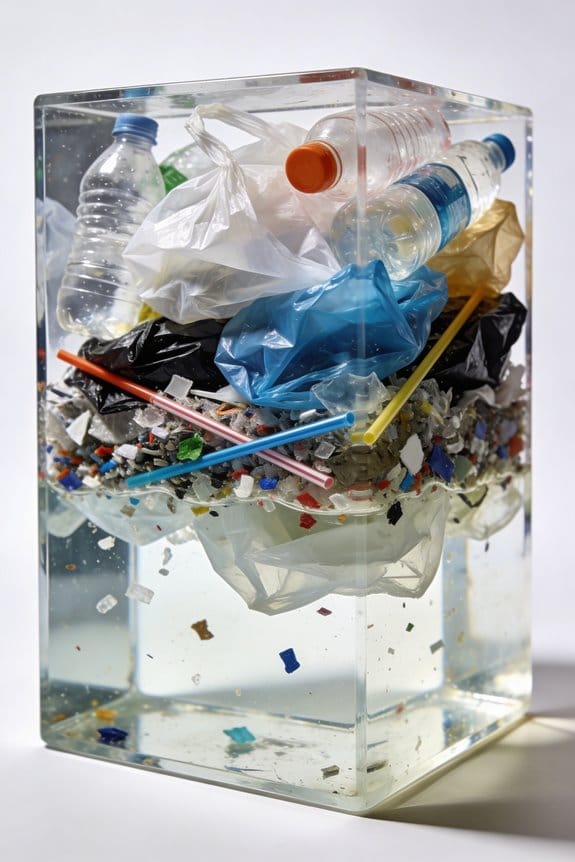


Ocean acidification and plastic pollution are closely linked, creating serious issues for our oceans. Since 1850, seawater acidity has increased by 26% due to carbon dioxide absorption, while plastic breakdown releases harmful compounds. This acidity affects marine life, especially organisms like corals and shellfish that rely on calcium carbonate for their structures. If we endeavor to reduce plastic waste and carbon footprints, we can help protect marine ecosystems. There’s more to explore about this connection and its effects.
Key Takeaways
- Ocean acidification results from increased CO2 absorbed by seawater and is exacerbated by plastic pollution releasing harmful organic compounds.
- Microplastics lower seawater pH by releasing dissolved organic carbon, further complicating marine ecosystems.
- Calcifying organisms like corals and shellfish struggle to form structures, impacting biodiversity and marine food chains.
- The decline in coral reefs due to acidification threatens coastal communities and marine ecosystems dependent on their health.
- Addressing both issues requires reducing plastic waste and emissions to promote healthier ocean environments.
Ocean Acidification: Causes and Effects
Have you ever thought about how our everyday actions affect the ocean? Ocean acidification is a big deal, and understanding its causes and effects can help us make better choices. This issue mostly comes from the ocean soaking up CO2 emissions from our activities. Since 1850, the acidity of seawater has increased by a whopping 26%. That’s a huge shift, leading to lower pH levels in marine ecosystems. To put it into perspective, ocean waters now absorb about 30% of these emissions.
What’s even more concerning is that plastic breakdown also adds to the problem. When plastics break down, they release organic compounds and CO2, which can drop the pH by up to 0.5 units. This is a real threat to marine life, especially for calcifying organisms like corals and oysters. They struggle to form their calcium carbonate structures in these acidic conditions.
So, why does this matter? The effects on marine biodiversity are massive, potentially threatening food webs and impacting global fisheries. Many communities depend on these fisheries for food and income. The last thing we want is for our ocean to become less capable of supporting life due to our actions.
Honestly, it’s pretty overwhelming to think about, but there are steps you can take to help. Reducing your carbon footprint, supporting sustainable seafood, and cutting down on plastic use can all contribute to healthier oceans. Using compostable garbage bags is one effective way to limit plastic pollution and its harmful effects on marine environments.
In short, ocean acidification is a major issue we need to pay attention to. With a little effort, we can make a difference. What steps will you take today for a healthier ocean?
How Microplastics Influence Ocean Acidification

Microplastics aren’t just unsightly bits of trash floating in our oceans; they can mess with the very chemistry of seawater. As these tiny particles break down, they release dissolved organic carbon and other chemicals, which can lower the pH levels of the water. This means our oceans are becoming more acidic, and that’s a big problem. In some polluted areas, pH levels can drop by as much as 0.5 units, which is alarming when you consider how that matches up with the worst predictions for 2100.
You might be wondering why this matters. Well, when it comes to marine life, acidification makes it tougher for creatures like corals and shellfish to build their shells. That’s right, the very building blocks of their homes are compromised. Plus, aged plastics, which have been battered by sunlight, release even more of that dissolved organic carbon compared to newer plastics, making the situation worse.
Try this: Think about how microplastics complicate ecological processes. They add another layer of stress on already fragile marine ecosystems, especially as climate change continues to create challenges. It’s a ripple effect—what impacts one part of the marine world can affect another, and ultimately, all of us.
So, the next time you see a piece of plastic waste on the beach or in the water, remember that it’s not just a visual problem. It’s an environmental battle that needs our attention. If we don’t take action, the consequences could be severe for marine life and—eventually—us too.
In short, microplastics are more than just a nuisance; they’re a ticking time bomb for ocean health. What do you think we can do together to tackle this growing issue? One effective step is to reduce plastic waste by switching to compostable alternatives whenever possible.
Impacts on Marine Life: Vulnerability of Calcifying Organisms

Have you ever thought about the impact of ocean acidification on marine life? It’s a real concern, especially for those little creatures that need calcium carbonate to thrive, like corals, plankton, and shellfish. Since the mid-19th century, ocean acidity has shot up by 26%, making it tougher for these organisms to create and keep their structures intact.
Coral reefs, which serve as vital homes for many marine species, are struggling with all this change. A weak coral is more prone to bleaching and diseases. Think about that—if we lose coral reefs, we’re not just harming the corals; we’re affecting entire ecosystems. And it doesn’t stop there. The tiny plankton that plays a big role in the ocean’s food chain finds it harder to photosynthesize effectively and reproduce. When these calcifying organisms start to disappear, it sets off a chain reaction that can impact fisheries and food security for various marine life reliant on them.
So, why does this matter to you? Well, the health of our oceans directly affects our lives and the food we eat. If these marine ecosystems collapse, we could face serious repercussions.
To sum it up, the ocean’s changing chemistry poses a big threat to calcifying organisms, and by extension, the entire marine food web. Isn’t it time we paid more attention to what’s happening below the surface? Choosing environmentally responsible products like plastic-free shampoos can help reduce pollution and protect these vulnerable ecosystems.
How Does Plastic Pollution Impact Marine Life and Exacerbate Acidification?
Have you noticed how plastic pollution isn’t just a problem on land? It’s wreaking havoc in our oceans too, and that’s something we need to chat about. When plastics break down, they release harmful compounds that can contribute to ocean acidification, dropping seawater pH levels by as much as 0.5 units in heavily polluted areas.
Microplastics are a huge concern as they invade marine ecosystems. They mess with the vital process of carbon sequestration, which is something that species like phytoplankton and zooplankton depend on for survival. So, why does this matter? These tiny creatures are often the foundation of the ocean’s food web, meaning that if they suffer, everything else follows suit.
Here’s the trick: Elevated CO2 levels, combined with all the plastic floating around, can actually mess with marine species’ metabolic rates and immune responses. This makes it tougher for them to adapt to changing environments. For organisms that need to build calcium carbonate structures—like corals and oysters—it’s getting downright difficult. It’s not just about the beauty of coral reefs; their decline threatens the livelihoods of coastal communities and entire marine ecosystems.
Truth is, plastic pollution and ocean acidification are interconnected issues that we can’t afford to ignore. The effects ripple out, impacting biodiversity and our environments in ways that could leave lasting marks. Moving forward, we should think about how our actions contribute to these problems. One important step is switching to biodegradable dog waste bags, which help reduce plastic pollution in our daily lives. What can you do in your daily life to reduce plastic waste and protect our oceans?
Recommended Products

Kit includes everything you need for powerful parts cleaning without harmful solvents!

5x Improved Pump Performance

POWERFUL 550W ROTARY PERFORMANCE – Delivers smooth, consistent torque for removing scratches, swirls, oxidation, and paint defects with precision.
How to Combat Plastic Pollution and Ocean Acidification
Plastic pollution and ocean acidification are serious issues that affect our planet, but there’s plenty we can do to make a difference. Have you ever thought about how much single-use plastic we go through? It’s shocking—around 150 million tons are produced every year!
To tackle this head-on, start by cutting down on these single-use plastics in your daily life. Every little effort counts. For instance, bring your own bags when shopping, say no to plastic straws, and consider a reusable water bottle. These small choices can contribute to a larger impact.
Did you know that effective waste management is key to stopping about 13 million tons of plastic from entering our oceans each year? This plastic crisis is directly linked to ocean acidification, which harms marine ecosystems. So, why does this matter? Because cleaner oceans mean healthier marine life and a more balanced ecosystem for all of us.
Supporting the global Plastics Treaty is a great way to encourage sustainable practices worldwide. It helps push for cooperation on environmental issues. Public awareness plays a huge role, too! When people understand that plastic breaks down into harmful microplastics and lowers seawater pH, they’re more likely to take action.
How about joining a local cleanup effort? There’s nothing like pulling some trash off the beach to feel like you’re making real change. You can play a direct role in managing plastic waste in your community.
Advocating for policies that limit greenhouse gas emissions and promote recycling is another effective step. Honestly, it’s not just about individual action—collective efforts can amplify our impact significantly.
Using alternatives like compostable flatware can reduce reliance on single-use plastics and support eco-friendly dining practices.
Together, through small changes and local initiatives, we can create cleaner oceans and ensure a healthier future for marine life. So, what will you commit to doing today?
Recommended Products
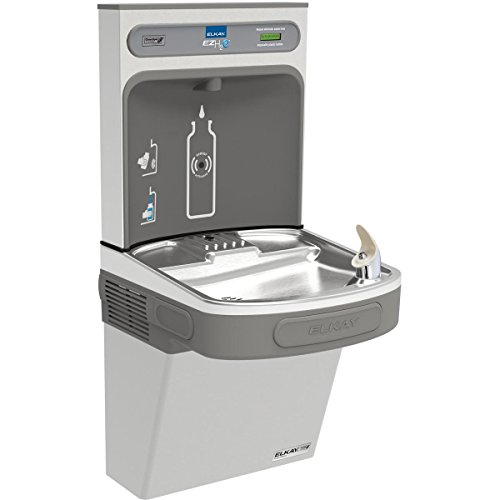
Features the tremendously popular EZH2O automatic (hands free) bottle filling station.

💧 Perfectly designed for 4-6 bathrooms homes, the Aquasure Signature Series is the professional grade Whole House Water system that delivers high quality filtered, ultra-softened water to every outlet throughout your entire home. No need for manual regeneration, backwash, draining, this system automatically regenerates and backwash, making it cost efficient and easy to maintain.

𝗦𝗰𝗲𝗻𝘁 - 𝗣𝗿𝗼𝗼𝗳, 𝗔𝗶𝗿𝘁𝗶𝗴𝗵𝘁 𝗮𝗻𝗱 𝗟𝗲𝗮𝗸 𝗣𝗿𝗼𝗼𝗳 : Heavy durable ultraviolet glass locks in aroma with airtight BPA free plastic lid. Insurance against the potency of your goods from leaking. Apothecary jars are good for long term storage.Our Sleek design jars come with an airtight seal with a tightly fitting black glass lid.These miron jars have substantive size, and they can easily fit a variety of organic and all-natural products.
Frequently Asked Questions
What Is Ocean Acidification’s Relationship With Climate Change?
Ocean acidification’s deeply linked to climate change through rising atmospheric CO2 and greenhouse gases. Increased carbon emissions alter ocean temperatures, disrupt acid-base balance, threaten marine biodiversity, and challenge coral reefs and shell formation, affecting ecosystem resilience.
Are All Marine Organisms Affected by Ocean Acidification?
We can’t ignore that all marine organisms are affected by ocean acidification. Coral reefs, shellfish populations, and fish species suffer, leading to biodiversity loss, habitat degradation, and unhealthy plankton, threatening keystone species and marine mammals.
How Can Individuals Help Reduce Plastic Pollution?
We can help reduce plastic pollution by adopting reusable products, participating in coastal clean-ups, supporting recycling initiatives, and raising awareness through campaigns. Together, let’s embrace sustainable living and challenge ourselves to be plastic-free!
What Are the Long-Term Effects of Ocean Acidification on Ecosystems?
Like a web slowly unraveling, ocean acidification threatens coral reefs, disrupts food webs, reduces species diversity, and causes habitat loss. Such changes impact nutrient cycling, fish populations, and overall ecosystem resilience essential for marine conservation.
Is There a Way to Reverse Ocean Acidification?
Yes, we can reverse ocean acidification through carbon capture, habitat restoration, and innovative technologies. By promoting marine resilience and enhancing calcium carbonate production, global collaboration can help stabilize pH balance and support species adaptation in ecosystems.