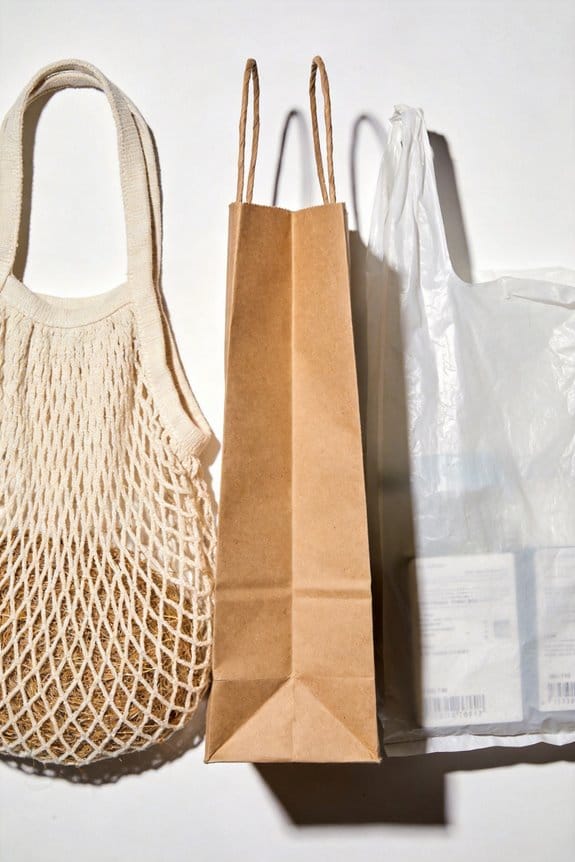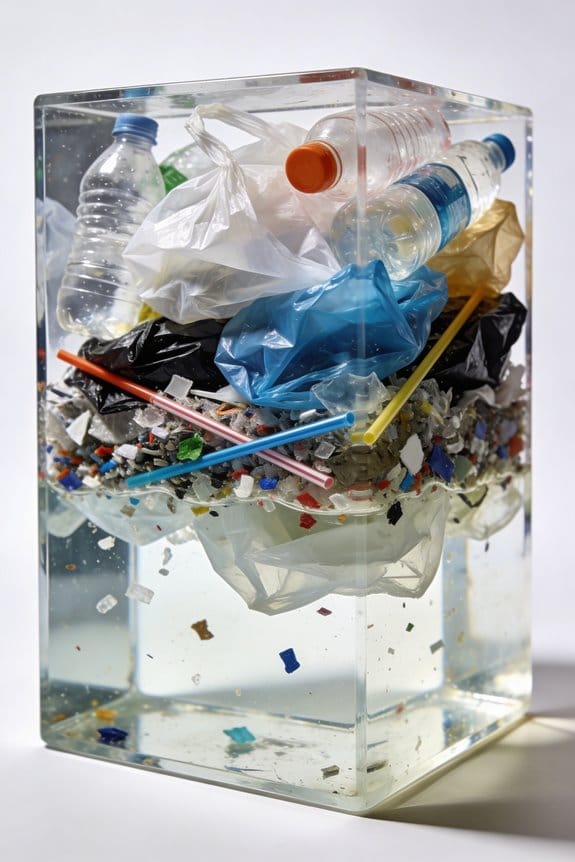
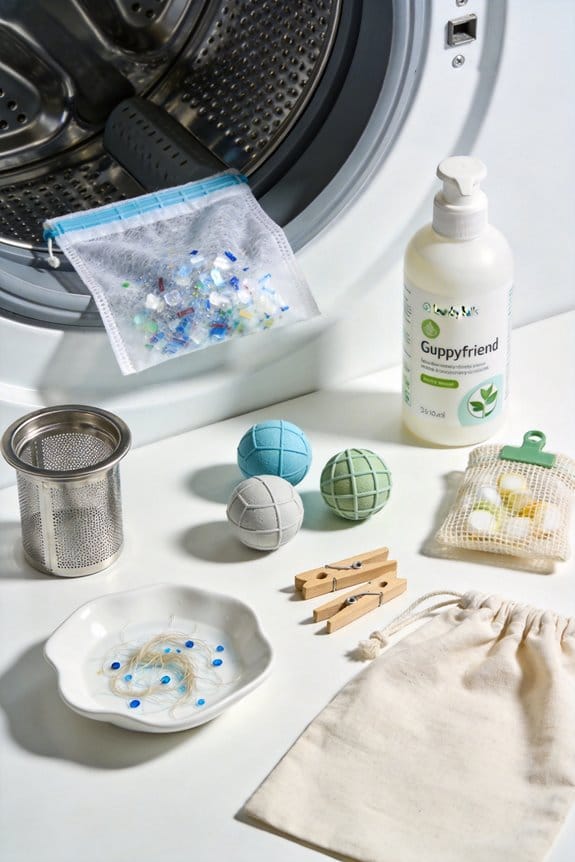

To reduce microplastics in our laundry cycle, let’s wash clothes less often and use cold water settings. Natural fibers like cotton and wool shed fewer microplastics than synthetics. Tools like the Guppyfriend Washing Bag and Cora Ball can capture up to 30% of fibers during washes. We should also choose eco-friendly detergents in reusable containers to minimize waste. By making these small changes, we can really help keep our oceans cleaner and protect marine life. There’s more to explore about sustainable practices!
Key Takeaways
- Wash clothes less frequently and in full loads to minimize fiber release and water usage.
- Use cold water settings to reduce wear on fabrics, thereby decreasing microfiber shedding.
- Choose natural fibers like cotton and wool, as they biodegrade and produce fewer microplastics.
- Implement tools like Guppyfriend bags or PlanetCare Filters to capture microplastic fibers during washing.
- Opt for eco-friendly, biodegradable detergents to minimize plastic waste and support sustainable laundry practices.
Why Microplastics From Laundry Matter
Microplastics from laundry might not be on your radar, but they’re a big deal. When you wash clothes, especially those made from synthetic materials, tiny fibers break off and make their way into our waterways. This is no small issue; it’s estimated that over 35% of primary microplastics found in oceans come from our laundry.
So, why does this matter? These microplastics don’t just threaten marine life; they can also enter the food web and potentially end up in our bodies. And even if wastewater treatment plants catch a lot of these fibers, millions still slip through due to old, outdated infrastructure. This means microplastics are not just a problem for fish but pose health risks for us as well because these tiny particles can carry harmful chemicals.
Want to do something about it? Here are a few simple changes you can make in your laundry routine:
- Wash Less: Try to wash your clothes only when they really need it. The less you wash, the fewer fibers are released.
- Use Cold Water: Washing in cold water can reduce the wear and tear on your clothes, which means fewer fibers end up in your wash.
- Choose Natural Fibers: Whenever you can, opt for clothes made from natural materials like cotton or wool. They don’t shed microplastics like synthetic fabrics do.
Truth is, making those small changes in how you do laundry can help cut down on the microplastics your household contributes. While it might feel like a tiny drop in the ocean, every little bit helps our planet. Using eco-friendly laundry detergents with biodegradable ingredients further supports reducing environmental impact.
The Importance of Choosing Sustainable Fabrics

When you’re out shopping for clothes, have you ever stopped to think about what those fabrics really mean for the planet? Natural fibers like cotton and wool don’t just feel great against your skin; they can actually help cut down on microplastic pollution. Unlike synthetic options like polyester and nylon that hang around longer, natural materials break down naturally and release far fewer microfibers when washed.
Here’s an interesting fact: fuzzy polyester fleece can pump out millions of those pesky microfibers in just one wash. Pretty wild, right? So, if you’re looking to make smarter choices, pay attention to the fabric’s weave as well. Loosely woven materials tend to shed more fibers, which means it’s usually a better bet to stick to tight weaves in natural fibers.
But there’s more to think about. Choosing sustainably sourced fabrics not only feels good, it supports eco-friendly manufacturing that can really make a difference. Here’s the trick: when you put your money into sustainable brands, you’re backing practices that help lessen our impact on the earth. Additionally, using eco-friendly detergents designed to minimize environmental impact can further reduce pollution from your laundry routine.
Recommended Products

AMUR is a bold, vibrant ready-to-wear brand that pushes the boundaries of sustainable fashion. Defined by strong shapes, unique prints, and joyful color palettes–the collection is an uncompromising celebration of femininity. AMUR expresses a positive vision for our future through its commitment to a mindful use of resources.

Fabric: Lightweight, non-stretch satin

This Classic console table makes a versatile addition to any room | display homemade treats and serveware for a charming dessert display at your next dinner party | clean silhouette will blend with any decor
Practical Tips to Minimize Microfiber Shedding in Laundry

Have you ever noticed those tiny fibers floating around after doing laundry? It turns out, washing synthetic clothes can release millions of microfibers into our waterways. So, how can you cut down on this shedding?
Start by washing your clothes less often and aim to do full loads. This not only saves water but also reduces the number of cycles that contribute to microfiber pollution. When you do wash, go for cold water settings. Cold water is gentler on fabrics, helping to keep them intact and minimizing fiber loss.
Consider skipping the gentle cycle and long wash times. More agitation means more fibers escaping your clothes. Instead, try using machine filters or mesh laundry bags. These can catch those sneaky microfibers before they go down the drain.
There’s also a simple solution you might want to think about: opt for clothes made from natural fibers instead of synthetics. This choice not only helps to reduce shedding but also gives you options that are more biodegradable.
Using eco-friendly laundry products can further reduce harmful chemicals and microplastic pollution while keeping your clothes clean and sensitive skin safe.
Recommended Products

The Filtrol is a patented,re-useable, microfiber filter that connects to your washing machines discharge hose. Use of the Filtrol can prevent premature septic system/drainfield failure, clogging of drain pipes and microfiber pollution in our natural water ways.
Round Area Rug: You will receive 1 round rug which measures 4 feet in diameter, perfect for decorating kitchens, bedrooms, bathrooms, apartments, dorm rooms, laundry rooms, nurseries, boys' and girls' rooms and more

Makes a Great Gift (HOL128): Perfect starter kit combines everything you need for a weekly wash on any car, truck, motorcycle, or SUV
Capture Microplastics With These Tools
Are you tired of worrying about the little bits of plastic getting washed down the drain with your laundry? You’re not alone! Microplastics are a real problem, but there are some cool tools you can use to help keep them out of our waterways.
Try this: the Guppyfriend Washing Bag is a fantastic option for trapping those pesky microfibers. It’s super effective and really reduces what gets into our wastewater systems. If you’re looking for something that works while you wash, the Cora Ball is worth checking out. It collects around 25% to 30% of fibers and is super easy to clean! Think about how much water we all use doing laundry—this could make a difference.
Want to up your game? Consider installing PlanetCare Filters in your washing machine. They can capture up to 90% of microplastics, which is pretty amazing. Just keep in mind they need some maintenance every 30 to 60 washes, but it’s a small price to pay for a cleaner environment. Also, adding microfiber filters can boost your collection efforts, even if there are still discussions about the best way to dispose of these.
Honestly, using a combination of these tools not only makes a big impact on reducing microplastic pollution but also helps tackle the bigger issue of synthetic clothing. Furthermore, choosing biodegradable formulas in your laundry products can complement these efforts by reducing the environmental impact of chemical residues.
So, why not give them a try? Every little bit counts when it comes to protecting our planet.
To recap, there are practical solutions out there to help you keep microplastics at bay during laundry. What will you do today to make a difference?
Recommended Products

EXTRA LARGE CAPACITY: 30"x 40", holds 40 lbs max, fits most standard baskets, meets large capacity storage and organizing needs
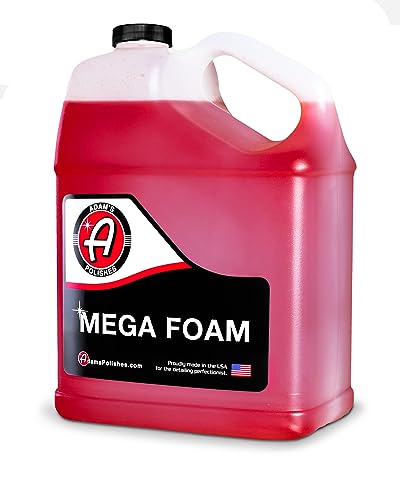
✅ CREATES A HUGE AMOUNT OF THICK, LUBRICATING SUDS SUDS SUDS - Adam’s Mega Foam Shampoo is designed for your foam gun or foam cannon providing the maximum amount of suds necessary to clean your vehicle without the chance of inducing scratches! With 10-times the normal concentration of standard soap formulas, Mega Foam provides the most chemically advanced foaming capability for your routine washes.

Bulk 30 Pack for High-Use Environments: Designed for dormitories, vacation rentals, laundromats, apartment complexes, and shared laundry rooms where frequent washing and organized sorting are required
Making the Switch to Eco-Friendly Detergents
Have you ever thought about what’s really going down in your laundry, aside from dirt and stains? The truth is, the detergents we choose play a big role in how we impact the planet. Reducing microplastics during laundry is essential, but we can’t overlook the kind of detergent we’re using.
Many eco-friendly options in liquid form can be found at zero waste stores. These options not only cut down on plastic waste but usually don’t contain harmful chemicals or those pesky microplastic beads. It’s a win-win for your clothes and the environment. If you want to take it a step further, powdered detergents in cardboard boxes are another great choice. They can completely ditch the plastic containers we’ve grown so accustomed to.
You might also consider eco-friendly laundry tablets. Some of these are plastic-free and steer clear of polyvinyl alcohol (PVA), which is known to contribute to microplastic pollution. So, why does this matter? It’s about making choices that reflect our values.
Many of these eco detergents also come with certifications that guarantee safer, biodegradable ingredients and responsible manufacturing practices.
Want to know where to start? Check out resources like Ethical Consumer and the Environmental Working Group. They can help you evaluate cleaning products that align with your eco-friendly goals.
Let’s be honest: It might feel overwhelming at first, but making adjustments in your laundry routine doesn’t have to be hard. You can explore options that not only care for your clothes but also care for our planet. So why not give it a try? Every small step counts. What changes are you ready to make?
Recommended Products

Advanced Laundry Control – +PLUS model adds wireless remote with 3 modes: Normal, Boost, or No O3. Adjust O3 output just like using more, less, or no detergent.

Nonionic, low foaming cleaner for use in labware washers, parts washers, power-spray systems, manual and ultrasonic cleaning

Banishing Grease with Excellence: Nellie's Dishwasher Powder stands as your guardian against grease, food particles, and more. Revel in spotless plates that speak volumes about your commitment to exceptional cleanliness and set the stage for meals that are as delightful as they are delicious.
Setting Realistic Goals for a Plastic-Reduced Laundry Routine
Ever think about how your laundry habits might be affecting the environment? It’s something many of us overlook, but setting realistic goals for a plastic-reduced laundry routine can really make a difference.
First off, try washing synthetic fabrics less often. Each time you toss them in the wash, millions of tiny microfibers get released into our oceans. That’s pretty alarming, right? To help minimize this, make a switch to cold water settings. They not only reduce microfiber shedding compared to hot washes, but they can also save on energy costs.
Mesh laundry bags are a nifty little tool, too. They can catch those rogue synthetic fibers while you wash. And while we’re at it, why not consider adding microfiber filters to your washing machine? They can help trap even more of those pesky fibers and keep them from ending up in our waterways.
You might also want to think about swapping out some of those synthetic clothes for natural fabrics like cotton or linen. True, they do shed some fibers as well, but at least they’ll biodegrade naturally over time. Plus, who doesn’t love the feel of a soft, cotton shirt?
Another simple trick? Spot cleaning and air drying! It’s a great way to cut back on how often you do laundry. Those little changes can add up—less frequent washes mean less impact on the planet!
For further reducing environmental impact, consider replacing single-use plastic soap containers used in laundry areas with eco-friendly and reusable alternatives like mason jar soap dispensers.
Frequently Asked Questions
How Do Microfiber Pollutants Affect Marine Life?
Microplastics ripple through our oceans like a silent storm. They drastically impact marine life, affecting fish ingestion and coral reefs, disrupting ecosystem balance, impacting wildlife behavior, and posing a severe biodiversity threat in our fragile ocean.
Can Washing Machines Be Modified to Reduce Microfiber Release?
Yes, we can modify washing machines through filter installations, microfiber mesh, and eco-friendly upgrades. By optimizing washing cycles and raising user awareness, we’ll enhance water usage reduction while harnessing advanced technology to minimize microfiber release.
What Are the Long-Term Effects of Microplastics on Human Health?
Microplastics exposure poses various health risks, including altered immune response, hormonal disruption, and developmental effects. They may contribute to respiratory issues and chronic inflammation, potentially impacting our nutrition absorption and overall well-being over time.
Are There Specific Fabrics That Shed More Microfibers?
Yes, fabrics like polyester and nylon tend to shed more microfibers, while cotton is durable and sheds less. Incorporating sustainable alternatives and employing better washing techniques and care practices can help minimize microfiber release.
How Often Should I Use Microfiber-Catching Products?
We should use microfiber-catching products with every load, especially for high-shedding fabrics. By combining eco-friendly options, adopting effective washing techniques, and enhancing consumer awareness, we can better manage microfiber filters and laundry frequency effectively.