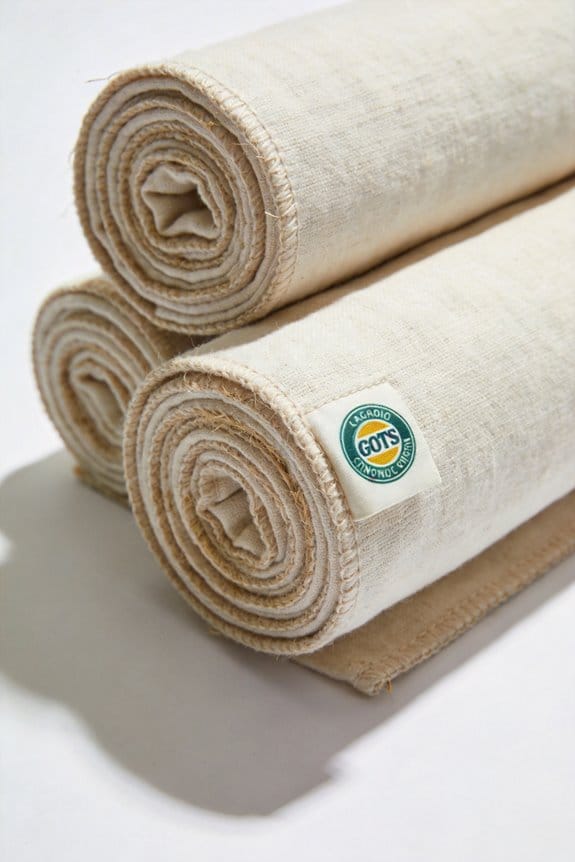
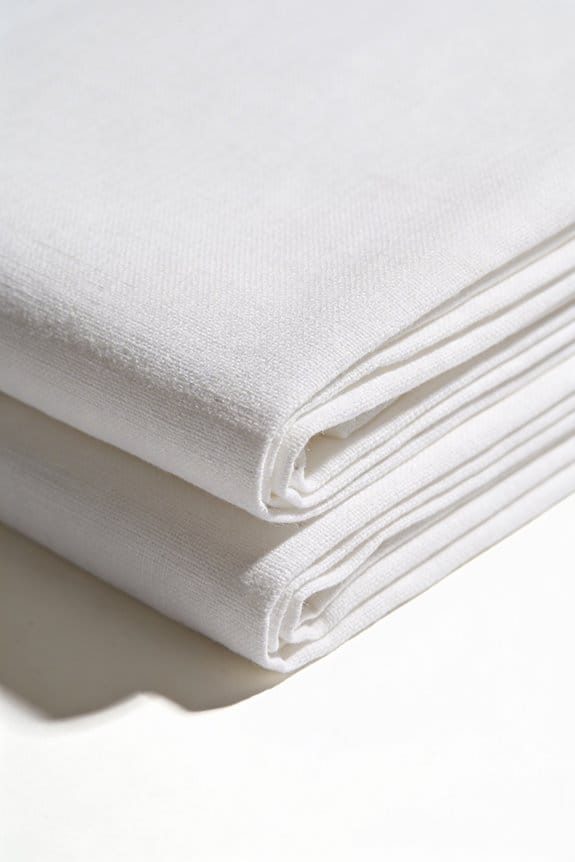

Understanding thread count and durability in sustainable linens is important for our comfort and the planet. We should aim for thread counts between 300 and 600 for softness and breathability, avoiding inflated numbers from manufacturers. Fabrics like organic cotton and bamboo are breathable and eco-friendly. Choosing weaves like percale or sateen affects feel and durability too. It’s great to know certifications like GOTS and OEKO-TEX guarantee safety and quality. Let’s explore more about how to pick the right linens for us!
Key Takeaways
- Thread count indicates fabric density, with an ideal range of 300 to 500 for sustainable linens, balancing comfort and durability.
- Higher thread counts (above 600) can compromise breathability and comfort, often using inferior, thinner threads.
- Sustainable fabrics like organic cotton and Tencel provide durability and a soft feel while being environmentally friendly.
- Certifications like GOTS and OEKO-TEX ensure that sustainable linens are free from harmful chemicals and produced responsibly.
- Durability in sustainable fabrics is enhanced by high thread counts and natural fibers, contributing to longer-lasting bedding options.
What Is Thread Count and Why Does It Matter?
When you’re on the hunt for new sheets, thread count can really trip you up! It measures how many threads are woven together in a square inch of fabric, both horizontally and vertically. So, what’s the sweet spot? Aim for a thread count between 300 and 600; this range usually gives you that perfect blend of softness and breathability.
Now, you might come across sheets with thread counts over 800 and think they’re a steal. But here’s the trick: those higher counts often rely on thinner threads, which means you might end up with fabric that isn’t as comfortable as it sounds. So, why does this matter? Because nobody wants to toss and turn at night because their sheets are scratchy.
Don’t overlook the importance of the material, either. Premium fibers like Egyptian cotton can really elevate the feel of your sheets, making them last longer and keep you cozy. It’s all about quality over quantity. If you’re diving into sustainable linens, consider how the overall makeup of the sheets holds up.
In short, while thread count is important, it’s just one piece of the puzzle. By focusing on quality materials and a balanced thread count, you can find sheets that are both eco-friendly and comfortable enough for a restful night’s sleep. What’s your go-to tip for picking out the perfect sheets? Remember that aiming for a thread count around 300 also ensures durability and breathability, which is key for long-lasting comfort.
Recommended Products

KING SIZE IVORY COTTON PERCALE SHEET SET WITH IVORY HEMSTITCH: King Size Fitted Sheet 78"x80", King Size Hemstitched Top Sheet 112"x112" and Pair of Hemstitched King Pillowcases 21"x37". Fully elasticated deep pocket fitted sheet to fit mattresses up to 16". Long staple cotton percale sheets woven in Italy.

300TC long-staple Egyptian Cotton Sheet Set.

Premium Egyptian Cotton – Crafted from 100% long-staple Egyptian cotton grown in the Nile River Valley, known for its exceptional softness, breathability, and lasting durability.
What Common Myths Exist About High Thread Counts?

Isn’t it wild how many misconceptions there are about high thread counts? You might think that the higher the thread count, the better the quality of the sheets. But here’s the kicker: manufacturers often puff up those numbers by using multi-ply yarns. This can lead to sheets that feel rougher than you’d expect and can hide lower-quality materials beneath the surface.
Ever notice how thread counts above 600 can actually make your sheets less breathable? That can really throw a wrench into a good night’s sleep. If you’re hunting for percale weaves, aim for a thread count between 200 and 300. For sateen weaves, somewhere around 300 to 700 usually hits the sweet spot, giving you that perfect combo of softness and durability. Choosing textiles made with plant-derived materials can also enhance comfort and sustainability in your bedding.
How to Pick Sustainable Fabrics That Last

How can you make smarter choices when picking sustainable fabrics that last? It can be a bit overwhelming with all the options out there, but focusing on a few key things can really help. For instance, look for sustainable fabrics made from natural fibers like organic cotton or bamboo. These materials are breathable and super comfy, perfect for long-term use.
When you’re shopping, check for certifications like OEKO-TEX or GOTS. These labels mean the fabrics are free from harmful chemicals, which is a big plus for both you and the environment. Don’t forget about thread count—aim for 300 to 500. This range gives you that cozy feel while still being durable over time. And if you want a little something extra, trying long-staple fibers like Egyptian cotton can make your linens even softer and stronger, standing up to frequent washes.
Here’s the trick: When you’re choosing brands, prioritize those that practice ethical sourcing. You’re not just helping the planet; you’re also ensuring you get quality linens that look great and last longer. Honestly, it can feel good knowing your purchases support responsible practices. Additionally, paying attention to the weight in GSM can help you select fabrics that balance absorbency, durability, and drying time effectively.
Recommended Products

ORGANIC COTTON SATEEN: Experience the comfort and luxury of 100% organic cotton sateen, known for its silky-smooth softness and natural breathability. The Naturepedic Organic Luxury Sheet Set (approx. 400 thread count) is made from certified organic cotton and has no harsh dyes or chemical treatments.

Pure, Natural Certified 100% Egyptian Cotton – Superior to standard duvet covers, this 100% certified Egyptian cotton duvet cover is softer, more breathable, and offers all-night cool comfort

KING SHEET BUNDLE - This Organic Cotton Sheet Bundle includes 1 Fitted Sheet(78”x80”), 1 Flat Sheet(108”x105”), 2 Pillowcases(21”x36”) with Envelope Closure, 1 Duvet Cover(108”x92”), 2 Pillow Shams(21”x36”) with Envelope Closure and to reduce plastic, this product comes in a reusable organic cotton bag.
Comparing Percale and Sateen Weaves for Eco-Friendly Bedding
When it comes to choosing between percale and sateen weaves for your eco-friendly bedding, you might be wondering what makes each one stand out. Percale has a simple, one-over-one-under structure that gives it a breathable, lightweight feel. This can be a lifesaver for hot sleepers since it helps keep you cool at night. Typically, percale sheets have a thread count between 200 and 300, and hey, the more you wash them, the softer they get.
On the flip side, you’ve got sateen. This weave uses a four-over-one-under technique that gives it that luxurious, silky feel we’re all a little obsessed with. It’s cozy and warm, making it a great choice for those chilly months. Thread counts for sateen usually range from 300 to 700, but keep in mind that higher counts can actually reduce breathability. If you’re someone who likes immediate softness, sateen really shines, but it does require a little extra care to avoid pilling.
So, why does this matter? If you’re looking to create a sustainable bedding collection, both options are durable and comfortable. They can enhance not just your bedroom’s look but also your sleeping experience. The best part is you can pick based on your personal comfort preferences—do you like cool and crisp or warm and silky?
Truth is, it all comes down to what you value most in your bedding. Whether you gravitate towards the breathability of percale or the soft warmth of sateen, you can feel good about your choice. Just remember to consider the climate you live in and your personal sleeping habits. What will you choose? Choosing certified materials like GOTS organic cotton also supports sustainability and ensures product safety.
Recommended Products

ELEVATE YOUR SANCTUARY WITH LUXURY: Immerse yourself in the understated sophistication of the Sferra Estate Collection. Crafted with precision in Italy, this bedding ensemble is a symphony of crisp white, long-staple cotton percale, and lustrous sateen appliqué details. It's the perfect addition to your queen or king size bed, offering a backdrop of sheer elegance that's perfect for elevating your space.

CALIFORNIA KING SIZE WHITE COTTON PERCALE SHEET SET WITH HEMSTITCH: California King Size Fitted Sheet 72"x84", King Size Hemstitched Top Sheet 112"x112" and Pair of Hemstitched King Pillowcases 21"x37". Fully elasticated deep pocket fitted sheet to fit mattresses up to 16". Long staple cotton percale sheets woven in Italy.
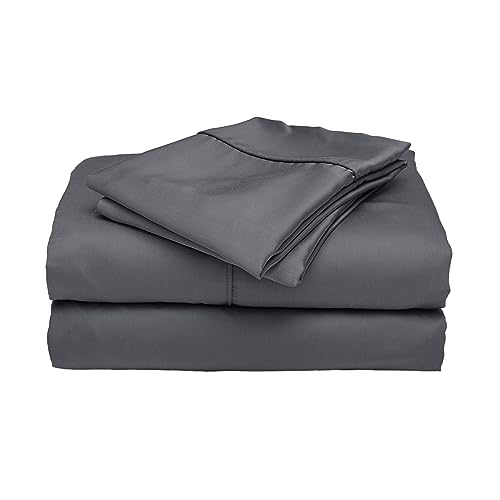
LUXURY SHEET SET - Our sustainable Clean fabric is a silky-soft, sateen weave that’s smooth to the touch and comfortable against your skin. Feels smooth like silk, and comparable to cotton 1,000 thread count. This set includes a fitted sheet, flat sheet and pillowcase(s).
Finding the Best Thread Count for Sustainable Linens
Finding the best thread count for sustainable linens can seem a little daunting, right? But it doesn’t have to be! If you aim for a thread count between 300 and 600, you’re in good shape. This range gives you a nice mix of softness, durability, and breathability. I know higher thread counts sound tempting, but they can actually make your sheets less breathable, and nobody wants that.
When you’re on the hunt for sustainable linens, here’s the trick: Focus on the quality of the yarn and the type of weave. Brands that use organic cotton or long-staple fibers can give you that luxurious feel without the need for an incredibly high thread count. Honestly, it’s all about the materials. You can still enjoy comfort and long-lasting durability even with lower thread counts.
So, what do you really need to keep in mind? Consider these key points:
- Look for organic materials or long fibers for that soft touch.
- A moderate thread count (300-600) is often more breathable.
- Pay attention to the weave; it can affect how the sheets feel.
Choosing linens that carry certifications like GOTS certification can also guarantee that the product meets high environmental and sustainability standards.
Truth is, when you choose wisely, you’re not just getting great sheets; you’re also making a more sustainable choice. So, take a little extra time to think about your options next time. Remember, quality truly shines through in your sleeping experience. What’s your favorite way to unwind after a long day?
Recommended Products

Sewn in the USA at Our Own Facility - This fitted grounding sheet is cut, sewn, and packaged in the United States at our GroundLuxe factory in Fall River, Massachusetts, giving us direct control over quality and workmanship.

INDULGE IN PURE COMFORT: Experience the softest and most luxurious bedding with these breathable cotton sheets, designed to provide a restful night's sleep. The King sheet set includes 1 flat sheet 66" x 96", 1 elasticized fitted sheet 39" x 75" + 15" deep pocket, and 2 standard pillow cases 20" x 30"

100% RAYON (VISCOSE) FROM BAMBOO: Not blended with other cheap fabrics like other brands.
Top Eco-Friendly Fabrics That Support High Durability
Are you tired of buying linens that fall apart after just a few washes? If you’re seeking eco-friendly options that won’t just look good but also stand the test of time, consider your fabric choices carefully.
Organic cotton is a solid go-to. Grown without harmful pesticides, it can be incredibly durable, especially if you opt for high thread counts. You’ll find that it resists wear over time. Then there’s linen. Made from the flax plant, linen isn’t just sustainable; it gets softer and more comfortable with every wash, which is great for textiles.
Let’s talk about Tencel. Made from sustainably sourced wood pulp, this fabric checks a lot of boxes—it’s biodegradable, super strong, and doesn’t wrinkle easily. Honestly, it’s a beautiful choice for anyone trying to reduce their environmental footprint without sacrificing quality.
Hemp fabric deserves a shout-out, too. It’s known for its long-lasting qualities and mold resistance, making it one of the toughest natural fibers out there. If you want something that’s truly built to last, this might be your fabric.
And don’t overlook recycled polyester. It’s a smart way to reduce waste, plus it creates sturdy fabrics that hold up after multiple washes without losing their integrity.
For bedding, choosing fabrics with certifications like GOTS or OEKO-TEX ensures both safety and sustainable quality.
Recommended Products

NATURALLY TEMPERATURE REGULATING - Sleep soundly and oh so cozy year-round with our breathable, moisture-wicking wool comforter, crafted from traceable organic British wool and a soft organic cotton cover. It naturally regulates temperature for a restful, uninterrupted sleep.

【300 Thread Count Tencel Organic Cotton Shell】 Encased in a downproof, 300-thread-count shell crafted from 50% Tencel lyocell and 50% organic cotton and finished with fine double-needle edge piping. OEKO-TEX Standard 100 certified, this naturally soft and breathable fabric provides excellent moisture-wicking properties and helps regulate temperature for comfortable lasting comfort. Perfect for those seeking cooling comfort.

OH SO COZY: Struggling to sleep on an uncomfortable, dated or passed down mattress? Choose a wool mattress topper to add an extra thick layer (2-3 inches) of padding to your bed for maximum, luxurious comfort.
Frequently Asked Questions
Does Thread Count Affect Breathability in Linens?
Thread count does affect breathability; high thread counts can lead to low breathability. Different cotton types and linen weaves influence fabric weight, air circulation, and moisture absorption, ultimately impacting our sleeping comfort.
Can I Wash Sustainable Linens Frequently Without Damaging Them?
Absolutely, we can wash our sustainable linens frequently without damage! For instance, using eco-friendly detergents and following care guidelines helps maintain fabric durability, prevents color fading, and enhances their lifespan with proper drying methods and stain removal techniques.
How Do I Rest Ret and Care for My Sustainable Linens?
To care for our sustainable linens, we should use eco-friendly detergents, gentle washing techniques, and proper drying methods. Stain removal, storage tips, and ironing guidelines help maintain durability and extend their lifespan.
Are All Organic Cotton Linens Created Equal in Durability?
Not all organic cotton linens are equal in durability. Factors like fabric blends, weaving techniques, and stitching methods affect their quality. We should compare brands and consider cotton grades, dye processes, and environmental impacts for longevity expectations.
What Certifications Should I Look for in Sustainable Linens?
When choosing sustainable linens, we should prioritize eco-friendly certifications like GOTS for organic standards, OEKO-TEX for safety, and Fair Trade for ethical impact. Also, look for biodegradable materials and natural dye certifications for added assurance.