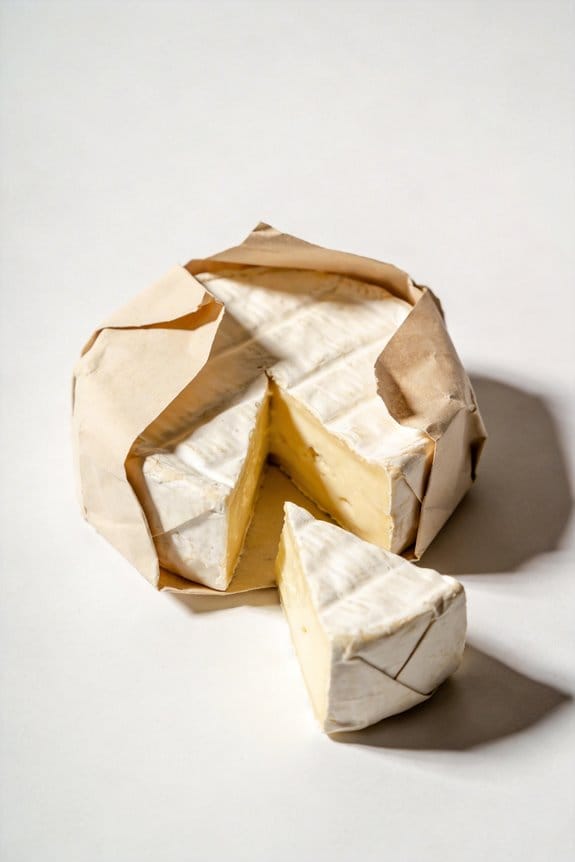

To store cheese properly using wax paper, we need to cut a piece that’s large enough to wrap the cheese completely. Place the cheese in the center and fold the paper around it loosely, allowing airflow. Label it with the cheese’s name and date for tracking. This method keeps cheese fresher, extending its shelf life up to three times longer than plastic. If you stick around, we can explore tips for keeping your cheese fresh and delicious.
Key Takeaways
- Cut a piece of wax paper large enough to completely wrap your cheese while allowing for airflow.
- Place the cheese in the center with cut surfaces facing up before tucking the wax paper around it loosely.
- Label the wrapped cheese with its name and date for easy tracking of freshness.
- Store the wrapped cheese in a lidded container or crisper drawer to maintain optimal conditions.
- Rewrap any cut wedges in fresh wax paper to prevent drying and preserve flavor.
Why Wax Paper Is Ideal for Cheese Storage
When storing cheese, keeping it fresh and flavorful can be tricky. You might have noticed that plastic wrap doesn’t quite do the job; it can actually make cheese soggy. This is where wax paper comes in to save the day. It lets the cheese breathe, keeping enough moisture in while letting any excess humidity escape. You want to keep the cheese quality and flavors intact, right? Wrapping your cheese loosely in wax paper helps protect it from the dry air in your fridge, too.
Did you know cheese stored in wax paper can last up to three times longer than cheese wrapped in plastic? That’s pretty impressive! The beauty of wax paper is that it helps prevent unwanted bacteria and mold from forming, which really extends the shelf life of your cheese. You might be wondering why you should care about this—after all, who doesn’t want to enjoy cheese that’s as tasty as possible for as long as possible?
Try this: pick up a roll of wax paper for about $5. You can get started on your journey to better cheese storage right away. The best part is that you’ll be amazed at how much longer your cheese stays fresh. So, the next time you’re stocking up on your favorite cheese, keep wax paper in mind, especially since combining it with absorbent natural materials like cork coasters can help maintain optimal moisture levels around your stored cheese.
Recommended Products

Last for 10 plus years

FOOD-SAFE WAXED PAPER: Our 36-inch x 900-feet wet waxed paper roll made from PFAS-free and unbleached kraft pulp. Double-sided food-safe wax coating provides top moisture resistance. It is 100% recyclable and made for safe commercial and home food use.

【Size】: 12"x20", 350 bags on a roll. 20 Rolls in total.
Step-By-Step Guide to Wrapping Cheese in Wax Paper

Wrapping cheese in wax paper might seem straightforward, but trust me, it’s a worthwhile skill to learn for keeping your cheese fresh. Have you ever dealt with that sad, dried-out piece of cheese that was supposed to be tasty? Here’s a simple way to avoid that.
Start by cutting a piece of wax paper big enough to wrap around the cheese completely, with some extra on the edges for folding. This extra space is important—don’t skimp! Once you’ve got your paper ready, lay it flat and place the cheese in the center. Make sure any cut surfaces are facing up to limit air exposure.
Here’s the trick: tuck the wax paper around the cheese. You want to wrap it loosely but securely. This kind of wrap allows for a little bit of airflow, which is crucial for storing cheese properly. Plus, if you really want to keep track of what you’ve got, label the wrapped cheese with its name and the date. Simple, right?
Once wrapped, pop that cheese into a lidded container or the crisper drawer of your fridge. This helps maintain humidity and keeps it from mingling with other foods, which can lead to contamination. Using an airtight storage container can further extend freshness by blocking moisture and air.
And there you have it! With a few easy steps, you can maintain your cheese’s freshness. Why risk wasting good cheese when it can stay delicious just by wrapping it correctly? What’s your favorite cheese that you’d want to keep fresh?
Recommended Products

【PFAS-FREE GREASE PROOF PAPER】 We offer Grease Proof Paper Sheets made of PFAS-free natural kraft paper. Pre-cut squares of 14 x 14 inches in size, a pack of 4000. These food paper sheets are made of 100% natural certificated paper, no wax, and no coating

Convenient size for deli interleaving

Perfectly sized 5.5 x 5.5 inch square sheets designed for efficient separation of burger patties, deli meats, and cheese slices, ensuring easy handling.
Top Tips for Keeping Your Wrapped Cheese Fresh in the Fridge

How can you keep your wrapped cheese fresh and tasty in the fridge? It can be a challenge to maintain that perfect flavor and texture, but with a few simple tips, you can really make a difference.
Start by wrapping your cheese loosely in wax paper. This trick allows for better airflow and helps to maintain its freshness. If you can, grab some cheese paper—it’s specially designed to balance moisture and airflow for various types of cheeses, whether it’s something soft like Brie or a firmer option like cheddar or gouda.
Now, let’s talk about what to avoid. You definitely don’t want to wrap your cheese in plastic wrap. Why? Because it can trap moisture and suffocate the cheese, leading to mold or funky flavors. Instead, think about storing your wrapped cheese in a lidded container or putting it in the crisper drawer of your fridge.
When you cut a wedge of cheese, remember to rewrap it in fresh wax paper. This small step can prevent it from drying out or developing mold. Honestly, it makes a noticeable difference in the taste and enjoyment of your cheese!
For particularly effective storage, consider using reusable beeswax wraps, as their breathable and flexible nature helps preserve cheese freshness while reducing plastic waste.
Recommended Products

CHEESE STORAGE & JOURNALING: Don't let your cheese spoil by using sandwich bags, produce bags or plastic bags that are made with non porous materials. Ensure that your cheese maintains freshness and flavor for longer with a freshness extender bag and paper from Formaticum that are porous and ideal for any cheese lover. Each package contains easy-to-use 6.25” x 11” storage bags, useful cheese storage sheets and pocket sized, 3.75" x 6" Journal.
CHEESE STORAGE & JOURNALING: Don't let your cheese spoil by using sandwich bags, produce bags or plastic bags that are made with non porous materials. Ensure that your cheese maintains freshness and flavor for longer with a freshness extender bag and paper from Formaticum that are porous and ideal for any cheese lover. Each package contains easy-to-use 6.25” x 11” storage bags, useful cheese storage sheets and pocket sized, 3.75" x 6" Journal.
![Fit Meal Prep [6000 Pack] 12 x 10.75" Wax Paper Sheets for Food, Interfolded Precut Deli Pop Up Grease-Proof Sandwich Paper Wraps, Waterproof for Lunch, Food Basket, Microwave Cover, BBQ](https://m.media-amazon.com/images/I/516ccVarr1L._SL500_.jpg)
Interfolded & Pre-cut: Interfolded design for fast and easy dispensing. After grabing one pre-cut wax paper sheet, next sheet will pop up in the box and be ready to go.
Extend Your Cheese’s Shelf Life With Wax Paper
Have you ever pulled a block of cheese from the fridge only to find it slimy and moldy? Yeah, it’s a bummer, but I’ve found that using wax paper can really help keep your cheese fresh and tasty.
So, what’s the deal with wax paper? Well, it lets cheese breathe. Unlike plastic wrap that traps moisture and can lead to mold growth, wax paper allows for airflow. This is crucial, especially for soft and fresh cheeses like ricotta, which tend to dry out quickly. Wrapping your cheese in wax paper can extend its shelf life significantly.
Here’s a simple tip: after you wrap your cheese, store it in the refrigerator’s crisper drawer. The humidity there helps maintain its freshness. If you’ve cut a wedge off, remember to re-wrap it with fresh wax paper to keep it in good condition.
The best part is you can enjoy high-quality cheese longer with this easy method. So, why not give it a try? You might just wonder why you didn’t switch to wax paper sooner! Plus, choosing eco-friendly packaging options like wax paper reduces plastic waste and benefits the environment.
Recommended Products

AMAZING PROTECTION AND FRESHNESS: The special coating on our freezer food paper provides a strong barrier against air and moisture, protecting meats, fish, and other food from freezer burn and keeping your food fresh and flavorful longer

AMAZING PROTECTION AND FRESHNESS: The special coating on our freezer food paper provides a strong barrier against air and moisture, protecting meats, fish, and other food from freezer burn and keeping your food fresh and flavorful longer

AMAZING PROTECTION AND FRESHNESS: The special coating on our freezer food paper provides a strong barrier against air and moisture, protecting meats, fish, and other food from freezer burn and keeping your food fresh and flavorful longer
How to Prevent and Handle Mold on Cheese?
Keeping cheese fresh can feel like a real balancing act, especially when it comes to battling mold. You’ve probably wondered, how can I enjoy my cheese without it tasting funky? First things first, always wrap your cheese loosely in cheese paper or wax paper. This little tip can make a huge difference because it allows the cheese to breathe. Plastic wrap might seem convenient, but it can suffocate your cheese, leading to unwanted mold.
Now, if you’re munching on some hard cheese and spot a bit of mold, don’t panic! Just cut away at least an inch around the moldy spot. The key here is to make sure you’ve removed any trace of it. But, when it comes to soft cheeses, things are a bit trickier. If mold appears, it’s best to toss it. Soft cheeses are more susceptible to harmful bacteria, and it’s just not worth the risk.
Here’s another thing: storing different types of cheese separately is a smart move. It not only helps keep flavors from mingling, but it also slows down mold growth. And if you notice that the rind of your cheese has a bit of mold on it, remove it before digging in or wrapping the cheese back up. It’s a small step that keeps your cheese safe. Using reusable paper towels can also help keep your cheese storage area clean and reduce waste.
Recommended Products
CHEESE STORAGE & JOURNALING: Don't let your cheese spoil by using sandwich bags, produce bags or plastic bags that are made with non porous materials. Ensure that your cheese maintains freshness and flavor for longer with a freshness extender bag and paper from Formaticum that are porous and ideal for any cheese lover. Each package contains easy-to-use 6.25” x 11” storage bags, useful cheese storage sheets and pocket sized, 3.75" x 6" Journal.

CHEESE STORAGE: Don't let your cheese spoil by using sandwich bags, produce bags or plastic bags that are made with non porous materials. Ensure that your cheese maintains freshness and flavor for longer with a freshness extender bag and paper from Formaticum that are porous and ideal for any cheese lover. Each package contains 15 easy-to-use 6.25” x 11” storage bags and 15 useful 11” x 14” sheets of paper so you can store just about any type of aged cheese.
Smart Ways to Use Up Leftover Cheese After Storage
Got some leftover cheese sitting in your fridge? It’s a common problem many of us face, but instead of tossing it out, there are some surprisingly tasty ways to bring those remnants back to life.
Try this: Soft cheeses like feta or goat cheese can be fantastic additions to salads. They’ll boost both flavor and nutrition, making your greens way more satisfying. On the flip side, if you’ve got hard cheeses like Parmesan, don’t just let them collect dust. Grate them over pasta or soups for an extra kick that takes your dish to the next level.
The best part is you can also go for those grill-worthy cheeses! Have you ever thought about whipping up a classic grilled cheese sandwich with semi-firm varieties like Gouda or Cheddar? Trust me, they melt beautifully, creating that gooey goodness we all crave. Or, why not give a quick fondue a try? It’s easier than you think and perfect for dipping all sorts of snacks.
Here’s another way to use up that leftover cheese: casseroles. Toss in whatever bits you have for a creamy, cheesy surprise. And if you’re feeling nostalgic, make a “Fridge Nubs Mac & Cheese.” It’s a fun way to do something creative with those odds and ends.
Honestly, breakfast can benefit from those cheese leftovers too. Mixing them into your omelets or scrambled eggs adds a protein boost and a lot of flavor. So, before you consider tossing your leftover cheese, just think about all the tasty possibilities waiting to happen!
In short, don’t let any cheese go to waste. They can be delightful additions to homemade cheese plates or any dish you’re whipping up. Which cheesy creation will you try first? Also, properly storing cheese using food-grade materials like wax paper can significantly extend its freshness and flavor.
Frequently Asked Questions
Can You Store Cheese in Wax Paper?
When we think of cheese varieties resting in a cozy cave, wax paper’s benefits shine. It guarantees proper storage temperature, promotes moisture retention, and helps us prevent mold, allowing cheese to age gracefully for our future enjoyment.
What Is the Best Way to Wrap Cheese to Keep It Fresh?
To keep cheese fresh, let’s wrap it loosely in wax paper for moisture control. Different cheese types benefit from varying storage temperatures, which helps preserve aging and flavors. We should avoid tight wrapping to prevent spoilage.
How Long Does Cheese Last When It’s Wrapped in Wax?
When wrapped in wax, cheese can last 2-4 weeks, depending on its type. Wax paper benefits include moisture retention and flavor preservation, enhancing the cheese shelf life while supporting the aging process under ideal storage conditions.
Should You Wrap Cheese in Foil or Cling Film?
We shouldn’t wrap cheese in foil or cling film. Instead, we opt for wax paper, a superior cling film alternative. It enhances cheese preservation techniques, allowing our fresh cheese to breathe while minimizing spoilage and off-flavors.