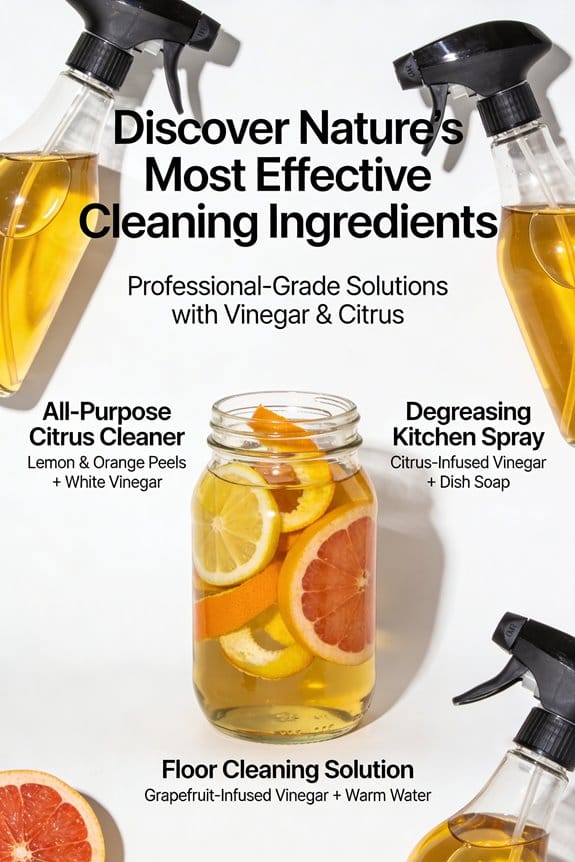

Making DIY natural cleaning solutions with vinegar and citrus is simple and effective. We can use 2 cups of citrus peels and mix them with 2 cups of plain white vinegar. After letting the mixture steep for 1 to 3 weeks, we strain it and dilute it with equal parts water. This cleaner works on kitchen counters, bathrooms, and even deodorizes trash cans. Plus, we can explore eco-friendly ways to use those peels afterward. There’s much more to discover!
Key Takeaways
- Create a citrus-infused cleaner by combining citrus peels with vinegar and letting it steep for 1 to 3 weeks.
- Strain the mixture, then dilute it with equal parts distilled water before transferring to a spray bottle.
- Use this versatile cleaner on surfaces like countertops, bathrooms, and glass for effective cleaning and deodorizing.
- Enhance the cleaner’s scent and antibacterial properties by adding essential oils or fresh herbs like rosemary.
- Store the cleaner in glass containers and use within 6-12 months to maintain its effectiveness while preventing mold growth.
Why You Should Use DIY Natural Cleaning Solutions for a Healthier Home
Cleaning our homes can feel like a never-ending chore, and many of us tend to grab whatever’s on sale at the store. But have you ever stopped to think about what’s in those commercial cleaning products? DIY natural cleaning solutions are not just better for the environment; they’re also kinder to your health.
Try this: mix vinegar and citrus peels to whip up a homemade cleaner. Vinegar’s natural acidity works wonders at cutting through grease and grime, making it perfect for countertops and other surfaces. Plus, using those citrus peels means you’re getting creative with scraps that would otherwise go in the trash. This helps embrace a zero-waste lifestyle, which is a win-win situation!
So, why does this matter? By choosing these natural ingredients, you’re significantly reducing harmful chemicals in your home. This can really benefit everyone—especially those who are sensitive to strong fragrances or toxins.
The best part is that making your own cleaners is surprisingly easy and much cheaper than buying brand-name products. You might find that you enjoy the process too!
In short, going the DIY route for cleaning can enhance your home environment while being cost-effective. Why not give natural cleaning a shot? Many eco-conscious individuals also combine these solutions with compostable cleaning tools to minimize plastic waste and maximize sustainability.
Benefits of Using Vinegar and Citrus for Maximum Cleaning Power

Have you ever found yourself staring at a stubborn stain, wondering if you’ll ever get rid of it? If you’re looking for a simple, effective solution, making your own cleaners with vinegar and citrus might be just what you need. The natural acidity of vinegar works wonders at breaking down grime and mineral deposits, making it a real powerhouse when it comes to cleaning.
Here’s the trick: by infusing vinegar with homemade citrus peels, you can really boost its effectiveness while softening that strong vinegar smell that can be a bit too much. Plus, the citrus essential oils not only help in fighting bacteria but also leave your space smelling fresh and uplifting.
- It’s safe for kids and pets.
- You’re creating a healthier home environment.
- It’s eco-friendly since you’re reusing peels that would normally be thrown away.
So, why does this matter? Because cleaning should be both effective and safe, right? Honestly, using infused vinegar with citrus not only makes your cleaning routine better but also aligns with a sustainable lifestyle—free from harsh chemicals that can do more harm than good.
The best part is, you can easily whip these cleaners up yourself without any heavy-duty chemicals. Just think about how nice it would feel to scrub your counters with a product you made yourself, knowing it’s safe and effective.
In the end, give infused vinegar and citrus a shot in your cleaning routine. It’s a simple way to boost your cleaning game and do your part for the planet. What’s your favorite natural cleaning hack?
For even better cleaning results, consider using biodegradable ingredients that break down naturally and reduce environmental impact.
Essential Ingredients for Your Citrus-Infused Vinegar Cleaner
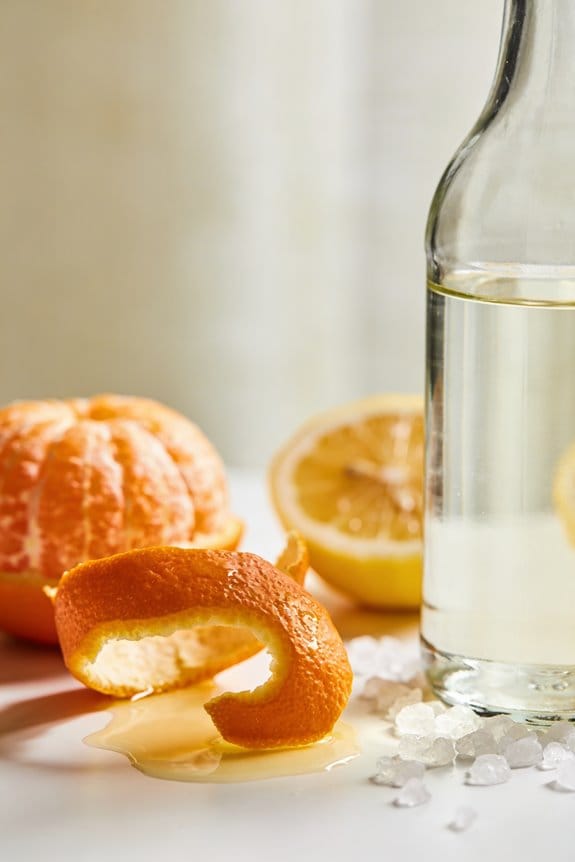
Creating your own citrus-infused vinegar cleaner is super simple, with just two main ingredients: 2 cups of citrus peels and 2 cups of plain white vinegar. You can use peels from lemons, limes, oranges, or grapefruits. Not only do these peels bring a bright, refreshing scent, but they also come packed with natural antibacterial properties thanks to their essential oils. This combo helps make your cleaning routine a whole lot easier.
So, here’s how to get started: First, tightly pack those citrus peels into a mason jar. Then, pour the vinegar over them until they’re fully submerged. The best part is you’ll need to let this mixture sit for about 1 to 3 weeks. The longer it infuses, the better the scent and cleaning power.
Once the time is up, you can strain the mixture and dilute it with distilled water in a 1:1 ratio. This gives you a terrific cleaning spray that’s ready to tackle all sorts of messes around your home. Seriously, who doesn’t love a DIY cleaner that smells great and works well?
Truth is, making this cleaner is not only cost-effective but also really satisfying. You’ll feel good knowing exactly what’s in your cleaner and how it’s made. Plus, using ingredients that are kind to the environment is a bonus.
To enhance your eco-friendly lifestyle even further, consider using reusable tote bags when shopping for your citrus and vinegar ingredients.
Have you tried your hand at making homemade cleaners before? It’s a fun project that pays off when you see how well they work.
Step-by-Step Instructions to Make Your Citrus Cleaner
Have you ever thought about how much money you spend on cleaning supplies? Making your own citrus cleaner is not only budget-friendly but also super easy. Now that your citrus-infused vinegar is ready to go, let’s dive into crafting the cleaning solution.
First things first, gather your materials. You’ll need a spray bottle and the strained vinegar from the mason jar. The next step is simple: dilute the citrus-infused vinegar with an equal part of distilled water. For example, if you’ve got one cup of vinegar, add one cup of water. This mixture is fantastic for cleaning all kinds of surfaces around your home.
Once you’ve mixed it up, carefully pour the solution into your spray bottle. It’s helpful to label the bottle so you’ll know what’s inside later on! Now, you’re all set to start spritzing it on countertops, tables, and even in the sink. The best part is, this natural solution captures the freshness of citrus peels along with the cleaning power of vinegar, which helps create a fresh scent in your home.
So, why does this matter? Using homemade cleaning solutions not only cuts down on chemical exposure but also makes cleaning feel a bit more personal and rewarding. Plus, vinegar-based solutions are known for their effectiveness against tough stains, making them an excellent choice for everyday cleaning. Next time you tackle those dirty surfaces, remember this easy recipe. It might just become your new go-to!
In the end, making your own citrus cleaner is a simple and satisfying solution. Why wait? Give it a try and see how refreshing it feels to clean with natural ingredients!
Eco-Friendly Ways to Use Citrus Peels After Cleaning
Ever wonder what to do with your citrus peels after making your homemade cleaner? Instead of tossing them in the trash, there are some awesome eco-friendly ways to give them a second life.
Composting is a great start. Not only does tossing those peels into your compost pile help enrich your garden soil, but it also cuts down on kitchen waste. It’s a two-in-one deal that benefits both your plants and the planet.
But that’s not all. Dried citrus peels can become a lovely potpourri that adds a natural fragrance to your space. It’s a simple way to bring a fresh scent into your home without relying on artificial air fresheners.
Here’s a little kitchen tip: soak some peels in a neutral oil to make an infused oil for dressings or marinades. It adds a burst of flavor to your meals, and you get to use something that would typically get thrown away.
If you have a garden, try scattering citrus peels around. They act as a natural pest repellent, keeping bothersome insects away without harsh chemicals.
And don’t forget about your fridge! Using leftover peels in there or in your trash cans is perfect for neutralizing odors. It keeps everything smelling clean and fresh, and who doesn’t want that?
To keep your citrus peels fresh and usable for these purposes, consider storing them in airtight containers to prevent moisture and spoilage.
The best part is, these simple tips not only help you get the most out of your citrus but also make a positive impact on the environment. So, what creative uses for citrus peels have you tried?
Properly Store Your Citrus Cleaner for Longevity
How long can you expect your homemade citrus cleaner to last? Well, it’s all about proper storage. To keep that cleaner effective as long as possible, you need to take a few simple steps.
First off, always go for a glass spray bottle. Why? Because using plastic can lead to unwanted chemical reactions that might mess with your cleaner’s potency. Next, find a cool, dark spot in your home to store it. Light and heat can break down the solution faster than you’d like. Aim to finish or use the cleaner within 6-12 months for the best results.
While you’re at it, don’t forget to keep an eye out for any mold. Removing all fruit bits is crucial to keep mold at bay. If you notice any funny growths, it’s time to toss the cleaner—better safe than sorry!
Honestly, making your own citrus cleaner is a fantastic idea, but you also want to make sure it stays both safe and effective. Have you checked your storage methods lately? It might just save your next cleaning session! Using glass bottles for storage helps maintain cleaner purity and prevents unwanted chemical interactions.
Effective Cleaning Applications for Your Citrus Cleaner
Cleaning can sometimes feel like a daunting task, right? But using a homemade citrus cleaner might just brighten up your cleaning routine—and it’s better for the environment too! This simple blend of citrus peels and vinegar, steeped in distilled water in a quart mason jar, works wonders on a variety of surfaces around your home.
Want to tackle your kitchen? Just wipe down your countertops with this cleaner, and you’ll notice how easily it cuts through grease and grime. It’s also fantastic for glass surfaces! Hard water stains become less of a problem, leaving you with a beautiful, streak-free shine that makes your windows and mirrors sparkle. You can keep your mirrors spotless without the need for any harsh chemicals—now who doesn’t like that?
When you dilute this citrus cleaner, it turns into a versatile all-purpose solution for your bathroom, too. It effectively cleans disinfect sinks, tubs, and toilets—making it a go-to for those often-overlooked areas. Here’s the trick: if you want to amplify that fresh citrus scent and add some antibacterial properties, toss in some fresh herbs like rosemary. It’s a lovely touch that makes cleaning feel a bit more special.
Frankly, you’ll be pleasantly surprised at how effective this cleaner can be. The best part is that it’s all-natural, so you can feel good about using it for your family. Plus, with just a few simple ingredients, you have a powerhouse cleaner right at your fingertips. Pairing this natural cleaner with biodegradable cellulose sponges enhances your eco-friendly cleaning routine while providing effective dirt and grime removal without scratching surfaces.
What to Keep in Mind for Safe Use of Vinegar Cleaners?
Have you ever reached for a vinegar cleaner, only to wonder if it’s safe for your surfaces? While vinegar’s acidity is great at breaking down dirt, it can actually damage certain materials, so it’s important to keep a few safety tips in mind.
First off, avoid using vinegar on natural stone surfaces like granite and marble. These materials can get etched, and you definitely don’t want that! Here’s the trick: always test your cleaner on a small spot before going all-in. This way, you can be sure it won’t cause damage to your surfaces.
When you’re making your vinegar cleaner, diluting it with water is a smart move. Mixing it in a 1:1 ratio can help reduce irritation that might come from the acidity. After infusing the vinegar with citrus peels for a fresh scent, remember to strain it through a mesh filter. This little step ensures that you remove any residue, which helps prevent mold growth—nobody wants that!
Storage is another key consideration. Keeping your vinegar solutions in glass containers is best for maintaining their effectiveness and safety over time. Truth is, you want to make sure your cleaning supplies are not just effective but safe for your home and family.
It’s also important to avoid harsh chemicals and choose natural-origin ingredients when combining vinegar with other cleaning agents to ensure safety and minimize skin irritation.
Enhance Your Cleaner With Botanicals and Herbs for Added Benefits
Enhancing a vinegar cleaner with botanicals and herbs not only amps up its cleaning power but also adds a wonderful scent. If you’ve ever wished your cleaning products smelled fresher, this is a great solution. Start by grabbing a jar and filling it with vinegar. Toss in citrus peels, like lemon or orange, for that zesty aroma.
Here’s the trick: add in some herbs like rosemary, thyme, or lavender. These not only smell great but they also bring some natural antiseptic qualities to the table. And if you want to take it a step further, including a few drops of essential oils can help fight bacteria naturally. For a soothing scent, consider throwing in a sprig of mint or some dried chamomile flowers too. Just make sure the botanicals you use are clean and dry to keep everything mold-free.
So, why does this matter? Well, using these natural ingredients keeps your home not just clean, but also smelling amazing. You’ll find your space feels fresher and more inviting. Plus, you can feel good knowing you’re using something relatively natural.
The best part is that it’s super simple to make! Just let your mixture sit for a week or two to let those flavors meld together. When it’s ready, you’ll have a cleaner that not only works hard but also makes your home smell delightful.
Common Mistakes to Avoid When Making Citrus Cleaners
Making your own citrus cleaners can be a fun DIY project, but it’s easy to trip up if you’re not careful. One of the first things you want to do is make sure every bit of fruit is cleaned off the peels. If you don’t, you might end up with mold in your mixture, and nobody wants that!
A good airtight container is a must, too—go for one with a non-metal lid. You might not think it matters, but using the wrong kind of lid can mess with the infusion process. And here’s a tip: if you have natural stone surfaces, like granite or marble, steer clear of using your citrus cleaner on them. It could actually cause some damage.
Before you dive in and start using your cleaner all over, test it out on a small, hidden area first. Just a little patch—it’s better to be safe than sorry. Keeping an eye on your infused solution is smart, too; check for any signs of mold or funky smells. If anything seems off, don’t hesitate to whip up a fresh batch.
Because some products emphasize eco-friendliness, making your own cleaner aligns well with sustainability focus encouraged by reusable alternatives.
With these little insights, you’re on your way to making effective citrus cleaners! Have you tried making your own cleaners before?
Frequently Asked Questions
How to Make Vinegar and Citrus Cleaner?
To make a vinegar and citrus cleaner, we can mix citrus peels with vinegar, let it infuse, strain, and dilute it. This eco-friendly cleaner offers a fresh scent and effective cleaning with simple DIY recipes!
What Not to Clean With Citric Acid and Vinegar?
We shouldn’t clean surfaces like natural stone or wood with vinegar and citric acid, despite vinegar’s benefits and citrus scents. Instead, let’s explore other eco-friendly options for effective natural disinfectant cleaning solutions.
What Not to Clean With Vinegar and Lemon?
While we might think vinegar properties and citrus benefits are unbeatable, let’s skip using them on natural stone, wood, or electronics. Instead, we can explore cleaning alternatives and eco-friendly solutions in our DIY recipes.
Can You Mix White Vinegar and Citric Acid for Cleaning?
We can mix white vinegar and citric acid for effective cleaning tips, leveraging vinegar benefits and citrus uses. However, let’s remember to test on surfaces first for safe, eco-friendly solutions with natural ingredients.